The field of aeronautical engineering offers a gateway to innovation, a discipline that shapes how humanity interacts with the skies. This guide endeavors to provide a factual overview for prospective students considering an aeronautical degree, charting a course through the essential considerations for unlocking a future in aviation and aerospace.
Aeronautical engineering is a specialized branch of engineering focused on the design, development, manufacturing, and maintenance of aircraft. It’s a discipline that demands a robust understanding of physics, mathematics, and materials science, serving as the bedrock upon which flight is built. Think of it as the blueprint for every wing that lifts a plane, every propulsion system that propels it, and every control mechanism that steers it. The scope of this field extends from the atmospheric flight of airplanes and helicopters to the atmospheric entry and flight of spacecraft.
Core Disciplines Within Aeronautical Engineering
An aeronautical degree program typically delves into several key areas, each contributing a vital piece to the puzzle of flight:
Aerodynamics
This area explores the principles of air in motion and its interaction with solid bodies. You will study concepts like lift, drag, thrust, and weight – the fundamental forces that dictate an aircraft’s ability to fly. Understanding airflow patterns, wing design, and the impact of speed and altitude on an aircraft’s performance are central to aerodynamics. It’s about understanding the invisible currents that cradle a machine in the sky.
Propulsion
Propulsion systems are the engines that power flight. This sub-discipline focuses on the design and operation of various engine types, from the familiar jet engines of airliners to the more complex rocket engines used in space exploration. You will learn about thermodynamics, combustion, and the mechanics of generating thrust. This is the heart of the machine, the driving force that overcomes inertia and gravity.
Structures and Materials
Aircraft must be strong yet lightweight. This area examines the structural integrity of aircraft components and the selection of appropriate materials. Topics include stress analysis, material properties (such as tensile strength, fatigue resistance, and density), and advanced composite materials. The goal is to build a resilient skeleton that can withstand immense forces.
Flight Mechanics and Control
This sub-discipline deals with the dynamics of flight and the systems that control an aircraft’s movement. You will learn about stability, controllability, and the design of flight control systems, both manual and automated. It’s about ensuring predictable and safe behavior in the dynamic environment of the atmosphere.
Avionics
Avionics, a portmanteau of “aviation” and “electronics,” encompasses the electronic systems used in aircraft, spacecraft, and missiles. This includes navigation systems, communication systems, flight instrumentation, and autopilots. This is the nervous system of the aircraft, processing information and making critical decisions.
Specializations in Aeronautical Engineering
While the core principles are universal, many programs allow for specialization, enabling students to focus on particular areas of interest. These might include:
- Aircraft Design: Concentrating on the conceptualization and detailed design of new aircraft.
- Aerospace Structures: Deep diving into the structural integrity and material science aspects of aerospace vehicles.
- Computational Fluid Dynamics (CFD): Utilizing computer simulations to analyze fluid flow and its effects on aircraft.
- Unmanned Aerial Vehicles (UAVs): Focusing on the design and operation of drones and other autonomous aircraft.
- Rotorcraft Engineering: Specializing in the unique challenges of helicopter and rotorcraft design.
The Path to an Aeronautical Degree: Educational Requirements
Embarking on an aeronautical engineering career requires a structured educational path, typically beginning with a strong foundation in science and mathematics at the secondary school level. The subsequent pursuit of a bachelor’s degree is the standard entry point into the profession.
Secondary School Preparation
A solid background in mathematics and science is paramount for success in an aeronautical engineering program. Prospective students should prioritize courses in:
- Mathematics: Calculus I, II, and III, differential equations, linear algebra. These are the languages of engineering, providing the tools to model and analyze complex systems.
- Physics: Mechanics, electricity and magnetism, thermodynamics. These subjects lay the groundwork for understanding the physical principles governing flight.
- Chemistry: While perhaps less central than physics and math, a foundational understanding of chemistry can be beneficial, particularly concerning materials science and combustion.
- Computer Science: Familiarity with programming languages can be advantageous for simulation and data analysis.
Bachelor’s Degree Programs
A Bachelor of Science (B.S.) or Bachelor of Engineering (B.E.) in Aeronautical or Aerospace Engineering is the typical degree sought. These programs are generally four years in duration and provide a comprehensive introduction to the core disciplines mentioned previously. Key elements of these programs include:
- Core Engineering Courses: A substantial portion of the curriculum is dedicated to foundational engineering principles, including thermodynamics, fluid mechanics, statics, dynamics, and heat transfer.
- Specialized Aeronautical/Aerospace Courses: In-depth study of aerodynamics, aircraft structures, propulsion systems, flight mechanics, and avionics.
- Laboratory Work and Design Projects: Hands-on experience is crucial. Students engage in laboratory experiments to validate theoretical concepts and participate in design projects, often involving the conceptualization and even construction of small aircraft models or components. These projects serve as microcosms of real-world engineering challenges.
- Mathematics and Science Electives: Opportunities to deepen understanding in areas like advanced calculus, abstract algebra, or specialized physics topics.
- Humanities and Social Sciences: A balanced education also includes courses in communication, ethics, and economics, fostering well-rounded professionals.
Graduate Studies: Advancing Your Expertise
For those seeking to specialize further, engage in cutting-edge research, or pursue advanced design and development roles, a master’s degree (M.S. or M.Eng.) or a doctoral degree (Ph.D.) in Aeronautical or Aerospace Engineering is often pursued. Graduate programs allow for deeper dives into specific areas and often involve significant research components. This is where you can really begin to sculpt your niche within the broader field.
Master’s Degrees
A master’s degree typically takes one to two years of full-time study and often involves a thesis or a substantial project. It allows students to concentrate on areas like:
- Advanced Aerodynamics: Focusing on supersonic or hypersonic flow, computational aerodynamics, or aeroelasticity.
- Space Systems Engineering: Exploring orbital mechanics, spacecraft propulsion, and mission design.
- Aviation Systems: Concentrating on air traffic management, flight safety, or operational aspects of aviation.
- Materials Science for Aerospace: Investigating novel materials and their application in aerospace structures.
Doctoral Degrees
A Ph.D. is a research-intensive program, typically taking four to six years, culminating in a dissertation based on original research. This path is ideal for individuals aspiring to academic careers, leading research and development initiatives, or pushing the boundaries of scientific knowledge in aeronautics.
Career Avenues: Where an Aeronautical Degree Can Take You
A degree in aeronautical engineering opens doors to a diverse range of career opportunities within a dynamic and evolving industry. The skills and knowledge gained are highly transferable, making graduates sought after in various sectors, both directly and indirectly related to flight.
Industry Sectors
The primary employment sectors for aeronautical engineers include:
Aircraft Manufacturing
This is perhaps the most direct application of an aeronautical degree. Major companies involved in the design, production, and assembly of commercial and military aircraft are significant employers. You might be involved in:
- Design and Development: Creating new aircraft models from concept to prototype.
- Manufacturing Engineering: Overseeing the production processes, ensuring quality and efficiency.
- Testing and Validation: Conducting flight tests and simulations to verify aircraft performance and safety.
- Systems Engineering: Integrating various aircraft systems to ensure they function harmoniously.
Aerospace and Defense
This sector encompasses a broader range of activities, including the development of spacecraft, missiles, and related technologies. Opportunities exist in:
- Space Exploration: Working on satellite design, launch vehicle development, and deep space missions.
- Defense Systems: Designing and developing advanced military aircraft, drones, and strategic missile systems.
- Research and Development: Pushing the boundaries of aerospace technology in government agencies and private contractors.
Airline Operations and Maintenance
While not always directly designing aircraft, aeronautical engineers play a crucial role in ensuring the continued safe and efficient operation of the fleet. This can involve:
- Fleet Planning and Engineering: Determining the optimal aircraft configurations and maintenance schedules for airlines.
- Technical Support: Providing engineering expertise to resolve operational issues and implement modifications.
- Performance Analysis: Monitoring aircraft performance to identify areas for improvement in efficiency and fuel economy.
Government and Regulatory Bodies
Agencies responsible for aviation safety, air traffic control, and space exploration are major employers of aeronautical engineers. Examples include:
- Federal Aviation Administration (FAA) or equivalent national bodies: Involved in setting safety standards, certifying aircraft, and overseeing air traffic management.
- National Aeronautics and Space Administration (NASA) or equivalent space agencies: Leading research and development for space missions and aeronautical advancements.
- Military branches: Employing engineers in research, development, and operational roles for aviation and aerospace assets.
Research and Academia
For those with a passion for discovery and knowledge dissemination, a career in research or academia is a rewarding path. This typically involves:
- University Faculty: Teaching and conducting research at universities, shaping the next generation of engineers.
- Research Institutes: Working in specialized institutions focused on advancing aeronautical or aerospace science and technology.
Typical Job Roles
Within these sectors, aeronautical engineers can hold a variety of roles, such as:
- Aerodynamicist: Specializing in the study of airflow and its effects on flight.
- Structural Engineer: Designing and analyzing the physical integrity of aircraft components.
- Propulsion Engineer: Working on the design and optimization of engines.
- Flight Control Engineer: Developing systems for aircraft maneuverability and stability.
- Systems Engineer: Integrating and managing complex aircraft systems.
- Test Engineer: Planning and conducting flight tests and ground simulations.
- Materials Scientist: Researching and developing new materials for aerospace applications.
- Project Engineer: Managing engineering projects from conception to completion.
- Computational Engineer: Utilizing simulation software to model and analyze aerospace phenomena.
Essential Skills for Success: Beyond the Technical
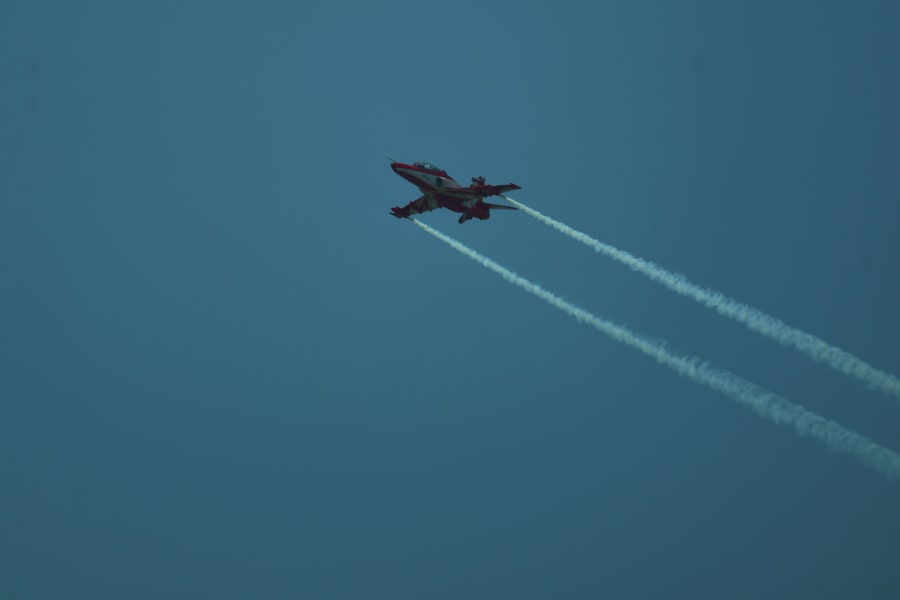
While a strong technical foundation is the prerequisite, becoming a successful aeronautical engineer also requires the cultivation of a range of soft skills. These are the tools that enable engineers to collaborate, innovate, and effectively communicate their ideas.
Technical Proficiency
This is the non-negotiable starting point. It encompasses a deep understanding of the core engineering principles, proficiency in relevant software tools, and the ability to apply theoretical knowledge to practical problems.
Analytical and Problem-Solving Skills
The ability to dissect complex issues, identify root causes, and devise elegant solutions is at the heart of engineering. Aeronautical engineers frequently encounter unforeseen challenges that require sharp analytical thinking. This is about being a mental architect, deconstructing problems to their fundamental components.
Computational and Simulation Skills
Modern aeronautical engineering relies heavily on computer-aided design (CAD), computational fluid dynamics (CFD), finite element analysis (FEA), and other simulation tools. Proficiency in these areas allows for rapid prototyping, performance prediction, and optimization without the need for expensive physical models and tests in the initial stages. This is akin to having a virtual wind tunnel at your disposal.
Soft Skills for Collaboration and Innovation
The technical expertise, however brilliant, needs to be effectively channeled. This is where soft skills become indispensable.
Communication Skills
The ability to clearly and concisely communicate technical information to both fellow engineers and non-technical stakeholders is vital. This includes written reports, presentations, and verbal discussions. Effective communication prevents misunderstandings and ensures alignment on project goals. Think of it as translating complex scientific jargon into understandable language.
Teamwork and Collaboration
Aeronautical projects are rarely solo endeavors. They involve diverse teams of engineers, technicians, and managers. The ability to work effectively within a team, to share ideas, offer constructive criticism, and compromise is crucial for project success. This is about being a cog in a well-oiled machine, contributing to a collective effort.
Adaptability and Continuous Learning
The field of aeronautics is in perpetual motion, constantly evolving with new technologies and discoveries. Aeronautical engineers must be willing to adapt to new methodologies, embrace new tools, and engage in lifelong learning to remain relevant and effective. The sky is not the limit; it’s a starting point, and innovation is the engine of progress.
Project Management Skills
Understanding project timelines, resource allocation, and risk assessment is increasingly important, especially for those in leadership roles. Even at junior levels, an awareness of project management principles contributes to efficient workflow.
Critical Thinking and Decision-Making
The ability to evaluate information objectively, consider trade-offs, and make sound decisions under pressure is paramount, especially in safety-critical applications. This involves weighing potential risks against benefits and choosing the optimal path forward.
The Future Landscape: Trends and Innovations in Aeronautics
| Metric | Value | Details |
|---|---|---|
| Average Duration | 4 years | Typical length of an aeronautical engineering bachelor’s degree |
| Core Subjects | 6-8 | Includes Aerodynamics, Propulsion, Materials Science, Flight Mechanics |
| Graduation Rate | 75% | Percentage of students completing the degree within 5 years |
| Average Starting Salary | 70,000 | Annual salary in USD for entry-level aeronautical engineers |
| Top Employers | 5 | Includes Boeing, Airbus, Lockheed Martin, NASA, Northrop Grumman |
| Job Growth Rate | 5% | Projected annual growth rate for aeronautical engineering jobs |
| Accreditation Bodies | 2 | ABET (USA), EUR-ACE (Europe) |
The field of aeronautical engineering is not static; it is a constantly evolving landscape driven by technological advancements, environmental concerns, and new frontiers of exploration. Understanding current trends and anticipating future directions is crucial for aspiring and established professionals alike.
Sustainability and Environmental Impact
A significant driver of innovation in aeronautics is the pressing need for greater sustainability. This involves reducing the environmental footprint of aviation through:
- Electric and Hybrid Propulsion: Developing energy-efficient aircraft powered by electricity or a combination of electric and traditional power sources. This represents a shift from historical reliance on fossil fuels.
- Sustainable Aviation Fuels (SAFs): Researching and implementing biofuels and synthetic fuels derived from renewable sources to reduce greenhouse gas emissions.
- Aerodynamic Efficiency: Designing aircraft with improved aerodynamic profiles and lighter structures to minimize fuel consumption and noise pollution.
- Noise Reduction: Developing quieter engines and airframe designs to mitigate the impact of aviation on communities.
Advanced Air Mobility (AAM) and Urban Air Mobility (UAM)
The concept of AAM, often encompassing UAM, envisions new forms of air transport within urban environments. This includes:
- Electric Vertical Take-Off and Landing (eVTOL) Aircraft: Designing and developing small, electric-powered aircraft capable of vertical take-off and landing, intended for passenger transport, cargo delivery, and emergency services. These are the nascent aerial taxis of the future.
- Unmanned Aerial Systems (UAS) for Delivery and Logistics: Expanding the use of drones for efficient and rapid delivery of goods and services in urban and remote areas.
- Infrastructure Development: Planning and establishing the necessary infrastructure, such as vertiports and charging stations, to support these new air mobility systems.
Supersonic and Hypersonic Flight
While commercial supersonic flight has seen a resurgence of interest following the retirement of the Concorde, hypersonic flight remains a significant area of research for both military and potential future transport applications.
- Next-Generation Supersonic Aircraft: Developing new designs and materials to enable faster, more efficient, and quieter supersonic travel.
- Hypersonic Vehicle Design: Exploring the challenges of designing vehicles that can travel at speeds exceeding Mach 5, facing extreme temperatures and aerodynamic forces. This is pushing the very limits of material science and thermal management.
Space Exploration and Commercialization
The expanding realm of space exploration and the burgeoning commercial space industry present substantial opportunities for aeronautical engineers.
- Reusable Launch Vehicles: Designing and operating rockets that can be reused for multiple missions, significantly reducing the cost of space access.
- Satellite Technology: Developing advanced satellites for communication, Earth observation, navigation, and scientific research.
- Lunar and Martian Missions: Contributing to the design of spacecraft and systems for future human and robotic missions to the Moon and Mars.
- In-Space Manufacturing and Servicing: Exploring the possibilities of manufacturing goods and servicing existing spacecraft in orbit.
Digitalization and Artificial Intelligence (AI)
The integration of digital technologies and AI is transforming every aspect of aeronautical engineering.
- Digital Twins: Creating virtual replicas of aircraft and systems to monitor performance, predict maintenance needs, and optimize operations throughout their lifecycle.
- AI-Powered Design and Optimization: Utilizing AI algorithms to accelerate the design process, identify optimal solutions, and explore new design spaces.
- Autonomous Systems: Developing increasingly sophisticated autonomous flight control systems for various applications, from commercial aircraft to drones.
- Predictive Maintenance: Employing AI to analyze sensor data and predict potential equipment failures before they occur, enhancing safety and reducing downtime.
Aspiring aeronautical engineers will find that staying abreast of these trends and embracing the opportunities they present will be key to a fulfilling and impactful career, allowing them to contribute to the ongoing evolution of how humanity takes flight.