Aerospace composite materials represent a significant evolution in aircraft and spacecraft design. Their application has revolutionized the industry, moving it away from a sole reliance on metals towards structures that are lighter, stronger, and more adaptable. This shift is not merely an incremental improvement; it’s a fundamental reimagining of what aerospace structures can be. Think of it like moving from carving a tool from a single block of wood to carefully layering and bonding different materials, each chosen for its unique properties, to create a far superior instrument. This article will explore the key advancements in aerospace composite materials, outlining their development, types, manufacturing processes, applications, and the ongoing challenges and future directions in this vital field.
Evolution of Aerospace Materials
From Metal Dominance to Composite Integration
For decades, aluminum alloys were the bedrock of aircraft construction. Their properties were well-understood, and manufacturing techniques were mature. However, the inherent limitations of metals—their weight and susceptibility to corrosion and fatigue—began to constrain designers as aircraft became larger and aircraft performance requirements escalated. The quest for lighter and stronger alternatives led to early investigations into composite materials.
Early Explorations and the Dawn of Fiber Reinforcement
The concept of composite materials, combining different constituent materials to achieve properties superior to its individual components, is not new. However, its systematic application in aerospace gained traction in the mid-20th century. Early efforts focused on reinforcing polymer matrices with materials like glass fibers. While offering some improvements, these early composites fell short of the performance needed for demanding aerospace applications. The true breakthrough came with the advent of advanced reinforcing fibers.
The Rise of High-Performance Fibers
The development of carbon fibers and aramid fibers (such as Kevlar) marked a turning point. Carbon fibers, in particular, offered exceptional stiffness and strength at a significantly lower density than metals. Aramid fibers provided excellent impact resistance and toughness. The ability to tailor the properties of the final composite by selecting specific fiber types, their orientation, and the matrix material opened up unprecedented design possibilities.
Defining Characteristics of Aerospace Composites

The appeal of composites in aerospace stems from a distinct set of properties that metals cannot readily match.
Strength-to-Weight Ratio
This is arguably the most significant advantage. Composites can achieve higher strength and stiffness than metals for the same weight. This translates directly into lighter aircraft, which means reduced fuel consumption, increased payload capacity, and enhanced maneuverability. Imagine an aircraft as a biological organism; a lighter skeleton allows for more efficient movement and greater endurance.
Tailorable Properties and Anisotropy
Unlike metals, which are generally isotropic (possessing uniform properties in all directions), composites are often anisotropic. This means their properties can be deliberately engineered to be strongest in the directions where stress is expected. This allows designers to optimize material usage, placing strength precisely where it’s needed, much like reinforcing a beam only in its load-bearing areas.
Fatigue and Corrosion Resistance
Metals are prone to fatigue failure under repeated stress cycles and can degrade through corrosion. Many aerospace composite systems exhibit superior resistance to these degradation mechanisms, leading to longer service life and reduced maintenance requirements. This robustness is crucial for components subjected to constant environmental and operational stresses.
Types of Aerospace Composite Materials
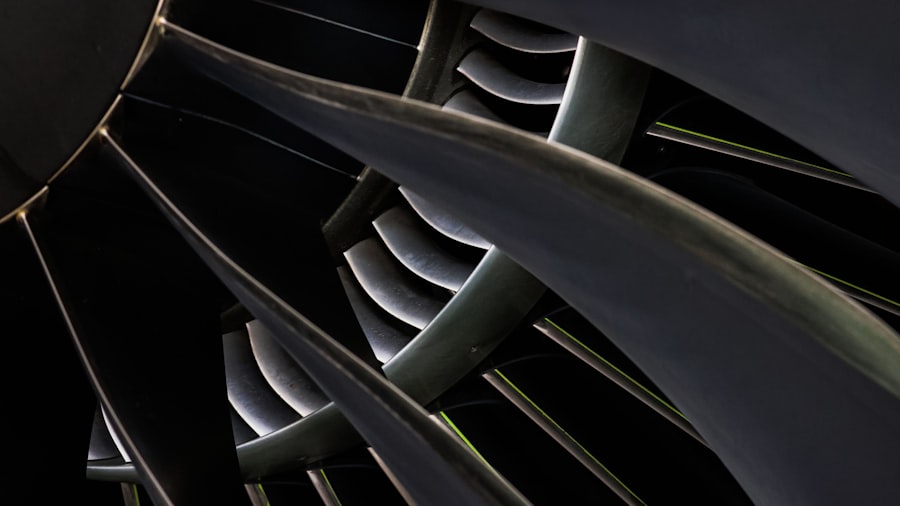
The landscape of aerospace composites is diverse, with variations arising from the reinforcing fiber and the matrix material used.
Fiber-Reinforced Polymers (FRPs)
This is the most prevalent category of aerospace composites. Here, polymer resins act as the matrix, binding together reinforcing fibers.
Carbon Fiber Reinforced Polymers (CFRPs)
CFRPs are the workhorses of modern aerospace composites. Carbon fibers, derived from the controlled heating of organic precursors, offer exceptional tensile strength and stiffness. When embedded in a polymer matrix, such as epoxy, they create a material that is both exceptionally light and incredibly strong. The development of various grades of carbon fiber, from standard modulus to ultra-high modulus, has further broadened their applicability. Examples include the primary structures of aircraft like the Boeing 787 and Airbus A350, which feature extensive use of CFRP.
Aramid Fiber Reinforced Polymers (AFRPs)
Aramid fibers, renowned for their high tensile strength, toughness, and impact resistance, are often used in conjunction with or as an alternative to carbon fibers. Their ability to absorb energy makes them particularly valuable in applications where ballistic protection or impact tolerance is a concern, such as certain aircraft components or astronautical applications.
Glass Fiber Reinforced Polymers (GFRPs)
While historically significant, GFRPs are generally not used for primary structural components in high-performance aerospace applications due to their lower strength and stiffness compared to CFRPs and AFRPs. However, they still find use in less demanding applications, such as fairings, internal structures, and radomes, where their electrical transparency and cost-effectiveness are advantageous.
Metal Matrix Composites (MMCs)
MMCs represent a class of composites where metal serves as the matrix, reinforced by ceramic or metallic fibers.
Advantages and Applications of MMCs
MMCs offer a blend of metallic properties, such as good electrical and thermal conductivity and ductility, with the enhanced stiffness and strength provided by the reinforcement. This makes them suitable for high-temperature applications where polymers might degrade, or in situations requiring a combination of mechanical and thermal performance. Examples include components in rocket engines or high-speed aircraft wing leading edges.
Current Limitations and Future Prospects
Despite their advantages, the widespread adoption of MMCs has been hindered by challenges in manufacturing complexity, cost, and the development of robust interfacial bonding between the metal matrix and the reinforcement. However, ongoing research into improved fabrication techniques and material systems holds promise for their future use.
Ceramic Matrix Composites (CMCs)
CMCs utilize a ceramic material as the matrix, reinforced with ceramic fibers or particles.
High-Temperature Performance and Strength
CMCs are designed to excel in extremely high-temperature environments where metallic alloys would falter. They retain their strength and stiffness at temperatures where metals melt or significantly soften. This makes them indispensable for applications like turbine engine components (e.g., turbine blades, exhaust nozzles) and reentry vehicles.
Challenges in Manufacturing and Brittleness
The inherent brittleness of ceramic materials poses significant challenges in CMC manufacturing, often requiring specialized processing techniques. Furthermore, achieving adequate toughness without compromising high-temperature performance remains an active area of research.
Advanced Manufacturing Processes for Composites
The unique nature of composite materials necessitates specialized manufacturing techniques that differ significantly from traditional metal fabrication. These processes are crucial for achieving the desired structural integrity and performance.
Lay-up and Curing Techniques
The fundamental process of creating composite structures involves carefully arranging layers of reinforcing fibers, often pre-impregnated with resin (pre-preg), and then curing them under controlled heat and pressure.
Hand Lay-up and Automated Fiber Placement (AFP)
Hand lay-up, a manual method, is still used for complex geometries and lower production volumes. However, for large-scale production and high-performance components, Automated Fiber Placement (AFP) and Automated Tape Laying (ATL) have become dominant. AFP machines precisely lay down continuous fiber tapes or tows according to programmed paths, ensuring optimal fiber orientation and reducing manual labor and material waste. This precision is like a master surgeon performing an intricate operation with robotic assistance.
Autoclave Curing
Autoclave curing is a widely used method where composite parts are placed in a pressurized vessel (autoclave) and subjected to controlled temperature and pressure cycles. This process consolidates the layers, removes voids, and initiates the chemical reaction (curing) that hardens the polymer matrix, creating a strong, monolithic structure.
Resin Transfer Molding (RTM) and Vacuum Infusion
These processes are designed for manufacturing components with complex shapes and features.
RTM and VARTM Explained
In Resin Transfer Molding (RTM), dry reinforcing fibers are placed in a closed mold, which is then injected with liquid resin under pressure. Vacuum-Assisted Resin Transfer Molding (VARTM) is similar but utilizes a vacuum to draw the resin through the fiber preform. These methods offer advantages in terms of controlled fiber volume fraction and reduced void content, leading to more consistent part quality.
Additive Manufacturing (3D Printing) of Composites
The emerging field of additive manufacturing is rapidly changing how composite parts can be created.
Advancements in 3D Printing Technologies
3D printing technologies are being developed to create complex composite structures with tailored internal geometries and anisotropic properties. This can range from printing continuous fiber-reinforced thermoplastic components to depositing composite pastes. The potential for rapid prototyping and on-demand manufacturing offers significant advantages.
Challenges and Future Potential
While still in its nascent stages for many aerospace applications, 3D printing of composites promises to enable novel designs, reduce tooling costs, and facilitate the creation of complex, integrated components that were previously impossible to manufacture.
Applications of Advanced Composite Materials in Aerospace
| Property | Typical Value | Unit | Notes |
|---|---|---|---|
| Density | 1.5 – 1.6 | g/cm³ | Lower than aluminum alloys (~2.7 g/cm³) |
| Tensile Strength | 600 – 1500 | MPa | Depends on fiber type and orientation |
| Young’s Modulus | 70 – 150 | GPa | Varies with fiber and matrix composition |
| Thermal Expansion Coefficient | 0.5 – 2.0 | ×10⁻⁶ /°C | Much lower than metals, beneficial for thermal stability |
| Fatigue Resistance | High | N/A | Superior to many metals in cyclic loading |
| Corrosion Resistance | Excellent | N/A | Resistant to environmental degradation |
| Typical Fiber Types | Carbon, Glass, Aramid | N/A | Carbon fiber most common in aerospace |
| Matrix Materials | Epoxy, BMI, Polyimide | N/A | Epoxy widely used for aerospace composites |
The impact of composites can be seen across virtually every sector of the aerospace industry, from commercial aviation to space exploration.
Commercial Aircraft Structures
The drive for fuel efficiency and performance has propelled the widespread adoption of composites in commercial airliners.
Fuselage, Wings, and Empennage
Modern aircraft like the Boeing 787 Dreamliner and Airbus A350 XWB are prime examples, featuring composite fuselages, wings, and empennages. These structures offer significant weight savings, leading to reduced fuel burn and lower emissions. The ability to form large, integral composite structures also reduces the number of joints and fasteners, further contributing to weight reduction and improved aerodynamic efficiency.
Interior Components and Cabin Design
Composites are also prevalent in aircraft interiors, contributing to weight reduction and offering greater design flexibility for cabin aesthetics and functionality. This includes overhead bins, sidewall panels, and floor panels.
Military Aircraft and Defense Applications
The enhanced performance characteristics of composites are highly valued in military aviation, where speed, agility, and stealth are critical.
Fighter Jets and Unmanned Aerial Vehicles (UAVs)
Many modern fighter jets utilize significant amounts of composite materials for their airframes, reducing weight and improving maneuverability. UAVs, particularly those designed for long endurance or high speed, also heavily rely on composites for their lightweight and durable structures. The ability to design for stealth characteristics through the selection of electromagnetic-transparent composite materials is another key advantage.
Ballistic Protection and Structural Reinforcement
Composites, particularly those incorporating aramid fibers, are used for ballistic protection in certain military vehicles and aircraft. They also serve as reinforcement for critical structural components, increasing their resistance to damage.
Space Exploration and Satellite Technology
The extreme requirements of space travel make composites indispensable.
Launch Vehicles and Rocket Components
The high strength-to-weight ratio of composites is crucial for launch vehicles, where every kilogram saved directly impacts payload capacity and launch costs. Composite materials are used in rocket stages, fairings, and interstages.
Satellites and Spacecraft Structures
Lightweight and durable composite structures are essential for satellites and spacecraft, where mass is a critical constraint. They are used for structural panels, antenna reflectors, and internal support structures, operating reliably in the harsh vacuum and temperature extremes of space.
Challenges and Future Directions
Despite the remarkable progress, the aerospace composite sector continues to evolve, facing ongoing challenges and pursuing new frontiers.
Cost and Affordability
While the performance benefits are undeniable, the initial cost of advanced composite materials and their manufacturing processes can be higher than traditional metals.
Efforts to Reduce Manufacturing Costs
Ongoing research and development are focused on improving manufacturing efficiency, developing lower-cost raw materials, and optimizing automation to reduce overall production costs. This is crucial for broader adoption across a wider range of aerospace applications.
Lifecycle Costs and Maintenance
While composites can offer reduced maintenance over their lifespan, understanding and developing effective methods for inspection, repair, and end-of-life recycling are critical for comprehensive lifecycle cost assessment.
Joining and Repair of Composite Structures
The dissimilar nature of composite materials presents unique challenges when it comes to joining different composite parts or repairing damaged sections.
Advanced Joining Techniques
New adhesive bonding techniques, mechanical fastening methods specifically designed for composites, and hybrid joining approaches are continuously being developed to ensure the integrity and strength of composite joints.
Composite Repair Strategies
Developing robust and reliable repair strategies for composite structures is vital for maintaining airworthiness. This includes advancements in automated repair systems and damage assessment techniques.
Sustainability and Recycling of Composite Materials
The environmental impact of manufacturing and the disposal of composite materials are areas of increasing focus.
Development of Recyclable Composites
Research into developing more easily recyclable composite materials, including thermosets that can be depolymerized or thermoplastics that can be melted and reformed, is a key priority.
Composites from Renewable Resources
Exploration into using bio-based fibers and resins derived from sustainable sources offers a pathway towards more environmentally friendly aerospace composites.
Next-Generation Composite Materials
The pursuit of even higher performance and novel functionalities drives research into next-generation composite materials.
Nanomaterial Integration
The incorporation of nanomaterials, such as carbon nanotubes and graphene, into composite matrices aims to further enhance mechanical properties, electrical conductivity, and thermal management capabilities.
Functionally Graded Composites
The development of functionally graded composites, where material properties vary gradually across a structure rather than exhibiting distinct layers, opens up possibilities for unprecedented performance optimization and stress management.
Conclusion
The journey of aerospace composite materials from early experiments to their integral role in modern aircraft and spacecraft is a testament to human ingenuity. The constant pursuit of lighter, stronger, and more efficient structures has been a powerful engine for innovation. As we look towards the future, the continued advancement in materials science, manufacturing technologies, and a growing emphasis on sustainability will undoubtedly shape the next generation of aerospace vehicles, pushing the boundaries of what is possible in our skies and beyond.