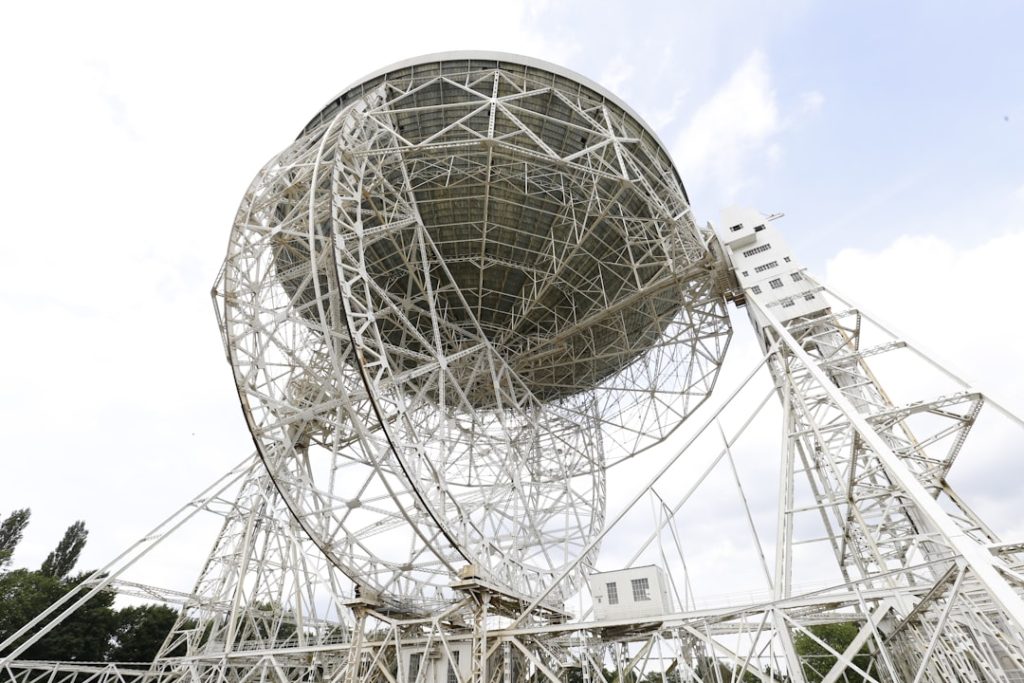
Astro engineering, a field at the nexus of astronomy and engineering, focuses on the design, construction, and deployment of instruments and systems for observing and interacting with the cosmos. The scope of astro engineering extends from the development of ground-based telescopes and space-based observatories to the conceptualization of missions for planetary exploration, satellite technology, and even the theoretical underpinnings of interstellar travel. Its advancements directly contribute to our understanding of celestial phenomena, the potential for extraterrestrial life, and the long-term survival and expansion of humanity beyond Earth. This is not a field of abstract contemplation only; it is about translating cosmic curiosity into tangible reality.
The bedrock of astro engineering lies in the creation of instruments capable of capturing faint light and other electromagnetic radiation from distant celestial bodies. These instruments act as our eyes, allowing us to pierce the veil of the universe.
Optical Telescopes
Optical telescopes, perhaps the most iconic astro engineering product, are designed to collect visible light. Their development has progressed from simple refracting lenses to sophisticated reflecting mirrors.
- Refracting Telescopes: Early astronomical observation relied on refractors, where lenses bend light to a focal point. While historically significant, their size is limited by the difficulty of manufacturing large, flawless lenses and the issue of chromatic aberration (color fringing).
- Reflecting Telescopes: Reflectors, utilizing mirrors to gather light, have become dominant. The Kepler and Hubble Space Telescopes, for instance, employ large primary mirrors. The continuous drive in this area is to increase mirror diameter, thereby enhancing light-gathering power and resolution. This is akin to perfecting a lens through which to view the universe, with larger lenses revealing finer details.
- Adaptive Optics: To combat atmospheric distortion, which blurs telescopic images, adaptive optics systems have been developed. These systems use deformable mirrors to actively correct wavefront errors in real-time, achieving image sharpness comparable to space-based telescopes. This technology acts like a sophisticated filter, smoothing out the cosmic static.
Radio Telescopes
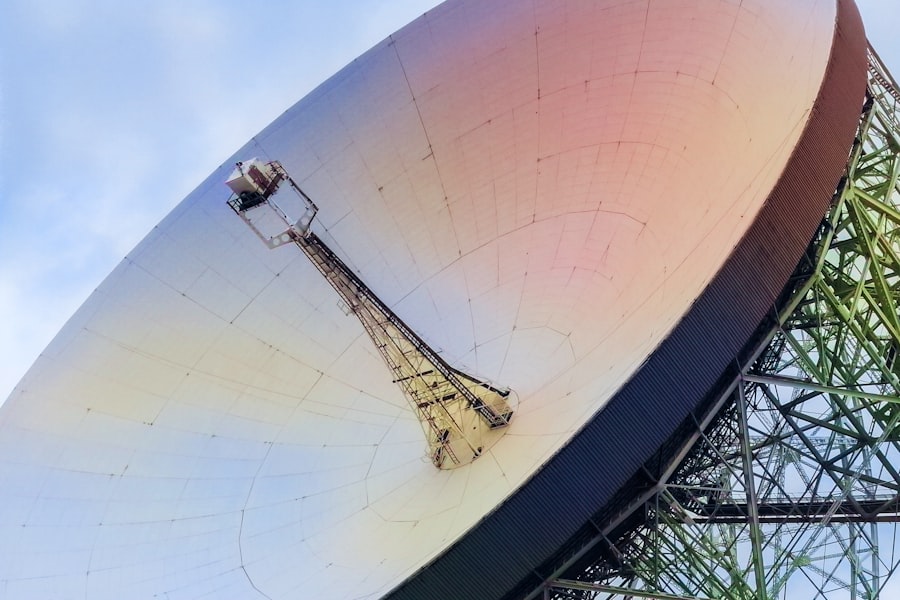
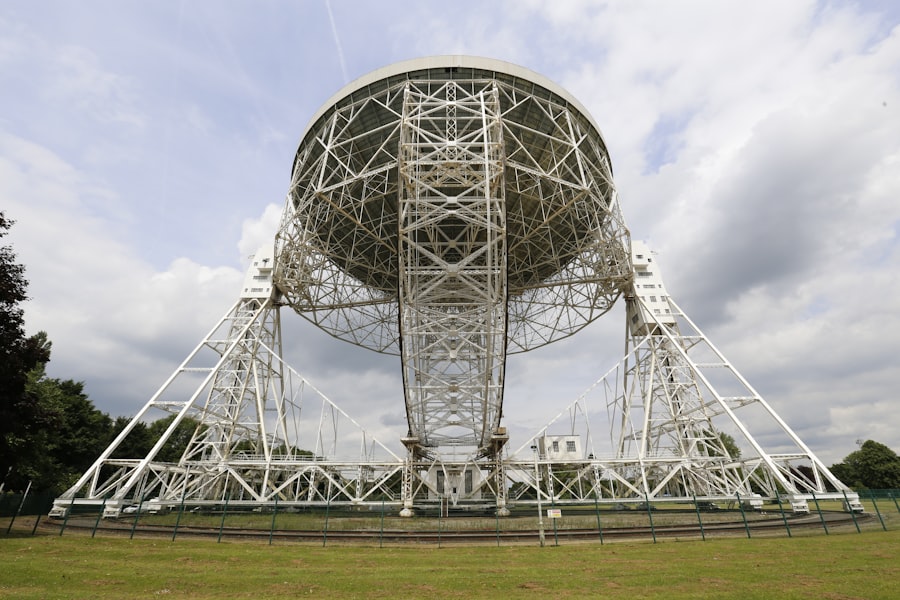
Beyond visible light, the universe broadcasts across the electromagnetic spectrum. Radio telescopes capture radio waves, revealing phenomena invisible to optical instruments.
- Single Dish Radio Telescopes: The Allen Telescope Array and the Effelsberg 100-m Radio Telescope are examples of large single dish radio telescopes. Their size dictates their sensitivity and their ability to resolve distant radio sources.
- Interferometry: To achieve higher angular resolution, radio interferometry combines signals from multiple, geographically separated telescopes. The Atacama Large Millimeter/submillimeter Array (ALMA) is a prime example, forming a virtual telescope with a diameter of many kilometers. This technique allows astronomers to see details as if they were using a single, enormous telescope, greatly enhancing their ability to study phenomena like star formation and black holes.
Spectrographs and Detectors
The light collected by telescopes is often processed by spectrographs, which disperse light into its constituent wavelengths. This spectral information, like a celestial fingerprint, reveals the chemical composition, temperature, and motion of celestial objects. Modern detectors, such as charge-coupled devices (CCDs) and infrared detectors, have revolutionized the speed and accuracy with which this data can be acquired.
Expanding Horizons: Space-Based Observatories
The Earth’s atmosphere, while essential for life, acts as a barrier to certain wavelengths of electromagnetic radiation and introduces noise. Astro engineering has therefore ventured into space to overcome these limitations.
Orbiting Telescopes
Placing telescopes in orbit circumvents atmospheric interference, providing clearer and more comprehensive observations.
- Hubble Space Telescope (HST): Launched in 1990, Hubble revolutionized astronomy by providing unprecedented views of the universe across visible, ultraviolet, and near-infrared wavelengths. Its longevity and continued scientific output are a testament to robust engineering and maintenance.
- James Webb Space Telescope (JWST): As Hubble’s successor, JWST is optimized for infrared observation, allowing it to peer further back in time and observe the formation of the first stars and galaxies. Its segmented mirror and advanced cooling systems represent significant engineering feats.
- Chandra X-ray Observatory: This observatory focuses on X-ray emissions, crucial for studying high-energy phenomena like supernovae remnants and active galactic nuclei.
Specialized Space Missions
Beyond general-purpose telescopes, dedicated missions probe specific aspects of the cosmos.
- Kepler and TESS: These missions are designed to detect exoplanets, planets orbiting stars other than our Sun. They employ the transit method, looking for slight dips in starlight as planets pass in front of their host stars. This is akin to listening for a faint whisper in the cosmic symphony, identifying potential homes for life.
- Parker Solar Probe: This mission is designed to study the Sun’s outer corona, providing crucial data about solar wind and space weather. It navigates incredibly challenging thermal environments.
- Voyager Program: The Voyager probes, launched in the 1970s, have ventured into interstellar space, carrying scientific instruments and golden records, representing humanity’s first physical probes beyond our solar system.
Reaching Out: Space Exploration Technologies
Astro engineering is not solely about observing; it is also about reaching out and interacting with celestial bodies. This involves the design and deployment of spacecraft, probes, and landers.
Propulsion Systems
Efficient and reliable propulsion is fundamental to space exploration.
- Chemical Rockets: The workhorses of space launches, chemical rockets, provide the thrust needed to escape Earth’s gravity. Incremental improvements in efficiency and thrust continue to be made.
- Electric Propulsion: For longer duration missions and in-space maneuvering, electric propulsion systems (e.g., ion engines) offer higher specific impulse, meaning they are more fuel-efficient, though they produce lower thrust. These are the patient long-distance runners of space travel.
- Future Concepts: Research into more advanced propulsion, such as nuclear thermal propulsion and solar sails, aims to reduce transit times for future deep space missions.
Spacecraft Design and Autonomy
Designing spacecraft requires integrating complex systems to operate in the harsh vacuum of space.
- Structural Integrity and Thermal Management: Spacecraft must withstand extreme temperature fluctuations and the vacuum of space. Robust materials and sophisticated thermal control systems are essential.
- Navigation and Guidance Systems: Precise navigation is paramount. Spacecraft employ a combination of star trackers, inertial measurement units, and ground tracking to maintain their trajectory.
- Robotic Autonomy: For missions to distant or hazardous environments, spacecraft must operate with a degree of autonomy. This involves artificial intelligence and sophisticated control algorithms to make decisions in real-time, without constant human intervention.
Landers and Rovers
Bringing instruments directly to the surface of other worlds requires specialized landing and exploration vehicles.
- Mars Rovers (e.g., Curiosity, Perseverance): These mobile laboratories are equipped with sophisticated instruments for analyzing geological samples, searching for signs of past microbial life, and assessing environmental conditions. Their ability to navigate challenging terrain and operate autonomously is a significant engineering achievement.
- Lunar Landers: Missions to the Moon, both crewed and uncrewed, have pushed the boundaries of soft-landing technology. The Artemis program aims to re-establish a sustainable human presence on the Moon, requiring advanced landing systems.
Building the Infrastructure: Satellites and Communication
Beyond purely scientific endeavors, astro engineering underpins a vast network of satellites that serve numerous practical purposes.
Communication Satellites
These satellites form the backbone of global communication, enabling everything from television broadcasting to intercontinental data transfer.
- Geostationary Orbit (GEO): Satellites in GEO orbit at the same rotational speed as the Earth, appearing stationary in the sky. This is ideal for continuous broadcasting but requires significant altitude.
- Medium Earth Orbit (MEO) and Low Earth Orbit (LEO): MEO and LEO constellations, such as SpaceX’s Starlink and OneWeb, provide lower latency internet services by utilizing a larger number of smaller satellites. This is like creating a dense mesh network across the planet.
Navigation Satellites
The Global Positioning System (GPS) and its international counterparts (e.g., GLONASS, Galileo) are essential for global navigation and timing.
- Orbital Mechanics and Ground Control: Maintaining these precise orbits and ensuring accurate timing signals requires sophisticated orbital mechanics calculations and constant monitoring from ground stations.
- Signal Integrity: Protecting navigation signals from interference and spoofing is an ongoing engineering challenge.
Earth Observation Satellites
These satellites are crucial for monitoring our planet’s climate, weather patterns, and natural resources.
- Remote Sensing Technologies: Equipped with various sensors, these satellites provide data for environmental monitoring, disaster management, and agricultural planning. This is Earth’s constant health check, performed from above.
- Data Processing and Analysis: The sheer volume of data generated by Earth observation satellites necessitates advanced data processing and analysis techniques to translate raw data into actionable information.
The Future Frontier: Towards Interstellar Ambitions
| Metric | Description | Typical Value / Range | Unit |
|---|---|---|---|
| Payload Capacity | Maximum mass a spacecraft can carry | 500 – 20,000 | kg |
| Delta-V | Change in velocity required for mission maneuvers | 3,000 – 12,000 | m/s |
| Specific Impulse (Isp) | Efficiency of rocket engines | 250 – 450 | seconds |
| Structural Mass Fraction | Ratio of structural mass to total spacecraft mass | 0.1 – 0.3 | dimensionless |
| Power Generation | Electrical power produced by spacecraft systems | 500 – 10,000 | Watts |
| Thermal Control Range | Operational temperature range for spacecraft components | -150 to 120 | °C |
| Communication Bandwidth | Data transmission rate between spacecraft and Earth | 1 – 100 | Mbps |
| Mission Duration | Expected operational lifetime of the spacecraft | 1 – 15 | years |
While current astro engineering focuses on our solar system and immediate cosmic neighborhood, ambitious long-term goals are driving research into more radical possibilities.
Advanced Propulsion Concepts
Reaching other star systems within human lifespans presents a monumental propulsion challenge.
- Fusion Propulsion: Harnessing nuclear fusion could provide the immense energy required for interstellar journeys, but it remains a distant technological goal.
- Antimatter Propulsion: Theoretically the most efficient form of propulsion, antimatter offers the potential for rapid acceleration, but its practical generation and storage are immense hurdles.
- Breakthrough Starshot Initiative: This ambitious project proposes sending swarms of tiny, laser-propelled probes to nearby star systems, aiming to reach Alpha Centauri within decades. This is akin to sending a fleet of digital hummingbirds on an interstellar errand.
Habitable Environments and Terraforming
The long-term survival of humanity may necessitate the establishment of off-world settlements.
- Artificial Habitats: Designing and constructing self-sustaining habitats on the Moon, Mars, or in orbit presents significant engineering challenges related to life support, radiation shielding, and resource utilization.
- Terraforming Theory: While highly speculative, the concept of terraforming planets to make them more Earth-like involves large-scale atmospheric and geological manipulation, pushing the boundaries of our engineering capabilities and ethical considerations.
Interstellar Communication and Detection of Extraterrestrial Intelligence (SETI)
The search for life beyond Earth requires both sophisticated detection methods and the capacity for interstellar communication.
- Advanced Telescopes for Biosignatures: Future telescope designs are being considered to detect atmospheric biosignatures on exoplanets, offering hints of biological activity.
- SETI Signal Analysis: The ongoing search for technosignatures—evidence of advanced extraterrestrial civilizations—relies on sensitive radio and optical telescopes and sophisticated signal processing algorithms.
The field of astro engineering is a continuous push against the boundaries of what is possible. From the intricate design of mirrors that capture the faint light of distant galaxies to the ambitious conceptualization of interstellar travel, it is a testament to human ingenuity, curiosity, and our enduring desire to understand our place in the vast cosmic tapestry. Each project, each breakthrough, is another step in unraveling the universe’s secrets and, perhaps, in securing humanity’s future among the stars. The journey is far from over; it is, in many ways, just beginning.