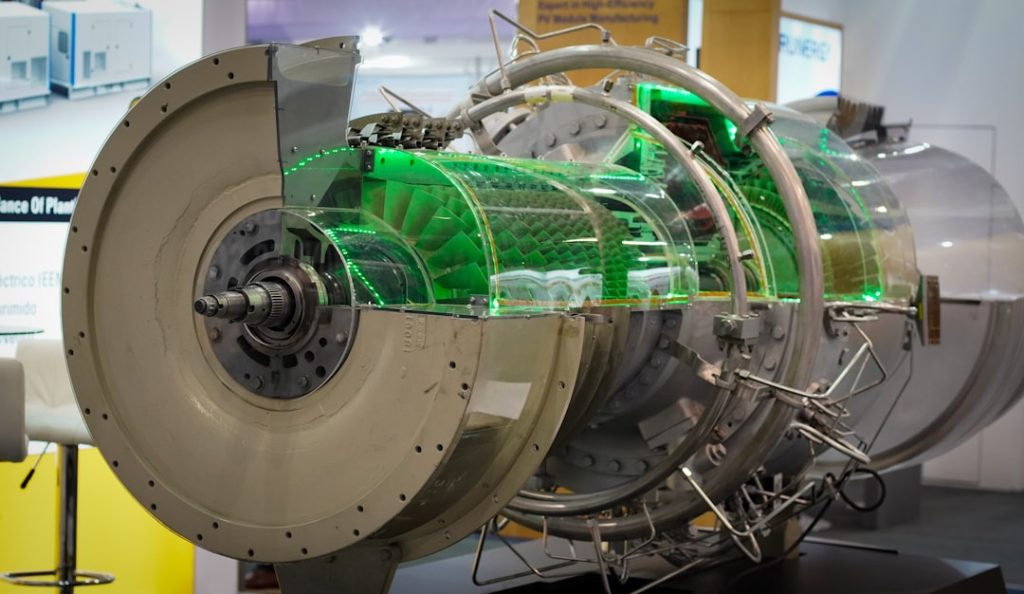
The field of aerospace engineering demands components manufactured to exceptionally high standards. The tolerances required for these parts are not merely tight; they are often measured in microns, where even a microscopic deviation can have significant consequences. This is where precision aerospace CNC machining plays a pivotal role. This article will explore the advancements and applications that define this critical manufacturing sector, examining its evolution, current capabilities, and future trajectory.
The journey of precision machining in aerospace is a story of relentless pursuit of accuracy and efficiency, mirroring the progression of aircraft themselves from biplanes to supersonic jets.
Early Machining Techniques and Limitations

In the nascent days of aviation, machining was largely a manual endeavor. Craftsmen used lathes, milling machines, and grinding machines, relying on their skill and experience to produce parts. While remarkable feats were achieved, the inherent variability of human operation placed a ceiling on the achievable precision.
Skill-Based Manufacturing
Operators were the linchpin of production. Their understanding of material properties, tool wear, and cutting forces dictated the quality of the final product. Micrometers and calipers were the primary tools for measurement, and meticulous attention to detail was paramount.
Material Constraints

The materials available in early aviation were predominantly iron and aluminum alloys. These materials, while suitable for their time, presented machining challenges due to their tendency to deform or work-harden. Achieving complex geometries with tight tolerances was a labor-intensive process.
Production Bottlenecks
The reliance on manual labor meant that production was slow. Complex parts required extended machining times, creating bottlenecks in aircraft assembly. This was an acceptable trade-off when production volumes were low, but it became unsustainable as aviation technology advanced and demand grew.
The Dawn of Numerical Control (NC)
The introduction of Numerical Control (NC) in the mid-20th century marked a paradigm shift. NC machines operate based on pre-programmed instructions, replacing manual manipulation with automated movements. This innovation laid the groundwork for the precision we see today.
Early NC Systems
Initial NC systems were relatively basic, often using punched paper tape to direct machine tool movements. While a significant step forward, these systems still required considerable setup and programming expertise. The machines themselves were more akin to automated manual machines than the sophisticated systems of today.
Increased Repeatability
A key advantage of early NC was its repeatability. Once programmed, a machine could execute the same cutting path multiple times with a degree of consistency that was difficult for human operators to achieve. This reduced part-to-part variation, a crucial factor for interchangeable components.
Limited Complexity and Speed
Despite their advantages, early NC machines had limitations in terms of the complexity of geometries they could produce and their machining speeds. The computational power of the era restricted intricate toolpath generation, and the mechanical systems of the machines were not yet robust enough for high-speed cutting.
The Rise of Computer Numerical Control (CNC)
The widespread adoption of computers in the latter half of the 20th century led to the development of Computer Numerical Control (CNC). This evolution integrated microprocessors and digital control systems, transforming machining capabilities and opening new avenues for precision manufacturing.
Digital Programming and Control
CNC machines utilize computer programs to define toolpaths, spindle speeds, feed rates, and other machining parameters. This digital approach allows for far greater complexity and flexibility in programming compared to older NC systems.
Advanced Geometric Capabilities
With CNC, designers could conceive and manufacturers could produce highly complex geometries – curves, intricate contours, and internal features – that were previously impractical or impossible. This unlocked the potential for more aerodynamically efficient and structurally optimized aircraft components.
Increased Efficiency and Throughput
The programmability and automation inherent in CNC machining significantly increased efficiency and throughput. Once a program was developed and proven, multiple identical parts could be manufactured with minimal human intervention, accelerating production cycles.
Advancements in CNC Machining Technology
The journey of CNC machining in aerospace has been marked by continuous innovation, pushing the boundaries of what is possible in terms of accuracy, material handling, and automation.
High-Speed Machining (HSM)
High-speed machining is not simply about turning the spindle faster; it represents a holistic approach to machining that leverages high spindle speeds, rapid traverse rates, and specialized tooling to achieve faster material removal rates with improved surface finishes.
Benefits of HSM
HSM allows for lighter, more rigid machine structures and smaller cutting tools. This combination leads to reduced cutting forces, which in turn allows for faster material removal without compromising accuracy. It also reduces heat generation at the cutting zone, leading to less thermal distortion of the workpiece. Think of it as a finely tuned scalpel versus a heavy chisel – the scalpel can make rapid, precise incisions with minimal disruption.
Tooling and Material Considerations
Achieving effective HSM requires specialized carbide and ceramic cutting tools with advanced coatings. The workpiece material also plays a role; materials that are prone to work hardening can benefit significantly from the reduced cutting forces and rapid chip evacuation associated with HSM.
Applications in Aerospace
HSM is particularly valuable for producing complex, thin-walled aerospace structures and impellers, where minimizing stress and distortion is critical. It enables the creation of parts with finer details and smoother surfaces, reducing the need for secondary finishing operations.
Multi-Axis Machining
The ability to move a cutting tool along multiple axes simultaneously has revolutionized the production of intricate aerospace components. While 3-axis machines move up and down, forward and backward, and left and right, multi-axis machines (4, 5, or even 6-axis) introduce rotational movements.
5-Axis Machining Capabilities
5-axis machining, a common standard in aerospace, allows the cutting tool to approach a workpiece from virtually any angle. This eliminates the need for multiple setups to machine different faces of a part, significantly reducing lead times and improving accuracy by maintaining a single datum.
Enabling Complex Geometries
This multi-axis capability is essential for machining complex aerodynamic surfaces, such as turbine blades, wing sections, and fuselage components, where intricate curves and highly specific angles are required. It allows for continuous machining of these shapes, ensuring smooth transitions and optimal performance.
Reduced Fixturing and Setup Times
By being able to access features from multiple angles in a single setup, the need for elaborate fixturing and repeated re-clamping is greatly reduced. This not only saves time but also minimizes cumulative errors that can arise from repositioning the workpiece.
Advanced Tooling and Diagnostics
The cutting tool is the sharp edge of precision. Continuous advancements in tool materials, coatings, and design, coupled with intelligent monitoring systems, ensure optimal performance and longevity.
New Tool Materials and Coatings
Development in materials like tungsten carbide, ceramics, and cubic boron nitride (CBN) allows for machining of harder materials at higher speeds. Advanced PVD (Physical Vapor Deposition) and CVD (Chemical Vapor Deposition) coatings reduce friction, increase wear resistance, and improve chip evacuation, extending tool life and improving surface finish.
In-Process Metrology and Tool Condition Monitoring
Integrated sensors and probing systems on CNC machines allow for real-time measurement of the workpiece during machining. Tool condition monitoring systems can detect signs of wear, breakage, or chatter, alerting operators to potential issues before they compromise part quality or damage the machine. This proactive approach is like having a vigilant sentinel watching over the manufacturing process.
Predictive Maintenance for Machines
Beyond tool monitoring, advanced systems are now capable of predicting potential machine failures based on various operational parameters. This predictive maintenance approach minimizes unplanned downtime, which can be extremely costly in high-demand aerospace production environments.
Materials Machined in Aerospace
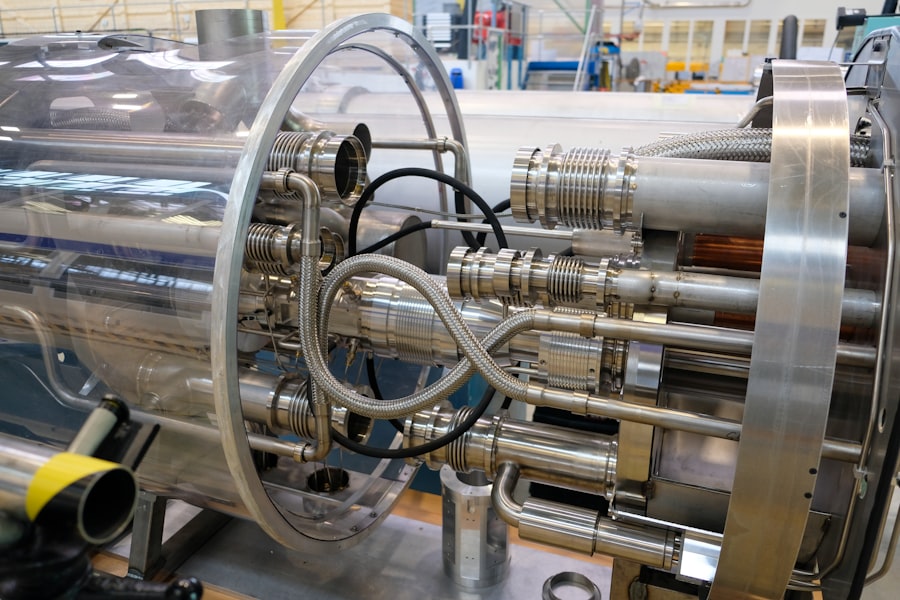
The selection of materials in aerospace is driven by the need for lightweight strength, heat resistance, and durability. Precision machining plays a critical role in shaping these advanced materials into functional components.
High-Strength Aluminum Alloys
Aluminum alloys are a cornerstone of aircraft construction due to their low density and good strength-to-weight ratio. Precision machining is essential for creating complex structural components from these materials.
Common Aerospace Aluminum Alloys
Alloys such as AA2024, AA7075, and AA6061 are widely used. Each alloy possesses specific mechanical properties that make it suitable for different applications, from airframes to internal structures.
Machining Challenges and Solutions
While machinable, these alloys can present challenges such as gummy chip formation and susceptibility to burning. Advanced cutting strategies, specific tool geometries, and effective coolant application are employed to overcome these issues and achieve tight tolerances.
Titanium Alloys
Titanium alloys offer an exceptional combination of high strength, low density, and excellent corrosion resistance, making them ideal for critical aerospace applications.
Key Properties of Titanium
The high melting point and low thermal conductivity of titanium make it challenging to machine. These properties can lead to rapid tool wear and increased cutting forces if not managed correctly.
Advanced Machining Techniques for Titanium
Machining titanium often requires slower cutting speeds, specialized carbide or cermet tooling, and high-pressure coolant systems to manage heat and evacuate chips effectively. The goal is to find the sweet spot where material is removed efficiently without overwhelming the tool or deforming the workpiece.
Nickel-Based Superalloys
These alloys are crucial for high-temperature applications, such as jet engine turbine blades, due to their exceptional strength and resistance to creep and oxidation at elevated temperatures.
High-Temperature Performance Demands
The extreme operating conditions in jet engines necessitate materials that can withstand immense heat and stress. Nickel-based superalloys are engineered for this purpose, but their hardness makes them notoriously difficult to machine.
Strategies for Machining Superalloys
Machining nickel-based superalloys often involves using polycrystalline diamond (PCD) tooling, aggressive cutting parameters with a focus on rigidity, and advanced flood cooling or cryogenic machining techniques. The process is slow and deliberate, prioritizing accuracy over speed.
Composite Materials
While not traditionally machined in the same way as metals, advanced composite materials, such as carbon fiber reinforced polymers (CFRPs), are increasingly being used in aerospace structures. The cutting and shaping of these materials require specialized techniques.
Machining of CFRPs
Machining CFRPs involves specialized routers, end mills, and waterjet cutting. The anisotropic nature of composites means that cutting forces can cause delamination or fiber pull-out if not managed carefully.
Precision Edge Quality
Achieving a precise and clean edge on composite parts is crucial for aerodynamic performance and structural integrity. Advanced machining processes aim to minimize damage to the laminate structure.
Applications of Precision Aerospace CNC Machining
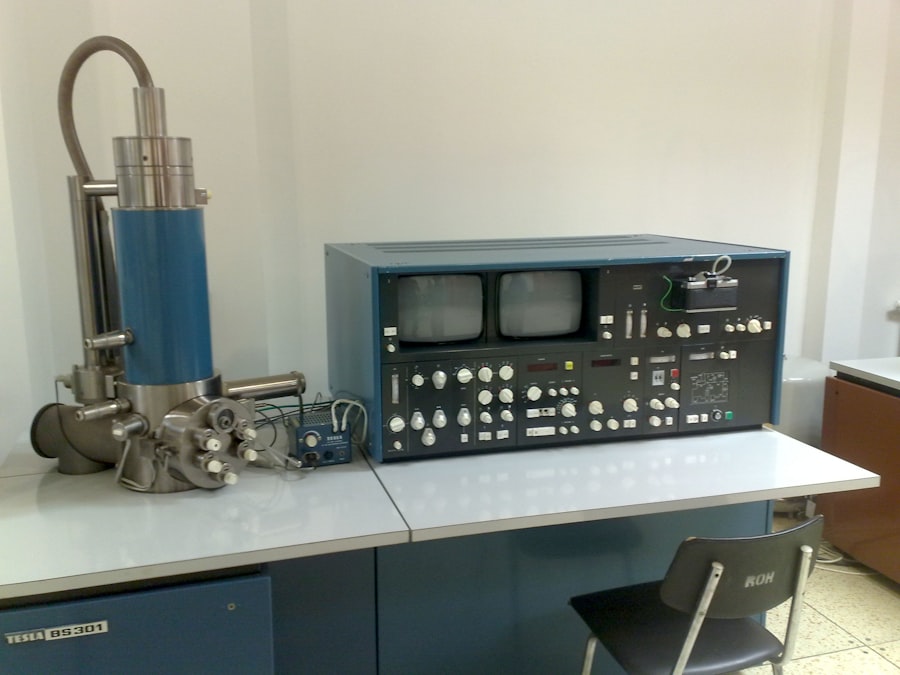
The impact of precision aerospace CNC machining is evident across a wide spectrum of aircraft and spacecraft components, where failure is not an option.
Aircraft Structures and Airframes
The very skin and bones of an aircraft are crafted with precision. From wing spars to fuselage panels, CNC machining ensures the structural integrity and aerodynamic efficiency of the airframe.
Fuselage Sections and Ribs
Large, complex fuselage sections and intricate internal ribs are machined to exact specifications, ensuring a perfect fit during assembly and contributing to the overall structural strength of the aircraft.
Wing Components and Spars
The design of wings is paramount for lift and efficiency. Precision machining allows for the creation of complex airfoil shapes, internal wing structures, and strong, lightweight spars that can withstand immense aerodynamic pressures.
Engine Components
Jet engines are marvels of engineering, operating under extreme temperatures and pressures. Every component within them is a testament to precision manufacturing.
Turbine Blades and Disks
Turbine blades, with their intricate airfoil shapes, and massive turbine disks are machined to incredibly tight tolerances. Even microscopic imperfections can lead to premature failure under the extreme rotational speeds and temperatures. This is where the scalpel analogy truly shines.
Compressor Casings and Stators
The precise shaping of compressor casings and stators is vital for directing airflow efficiently through the engine, maximizing performance and fuel economy.
Landing Gear Systems
The landing gear is subjected to immense forces during takeoff and landing. Components must be robust, reliable, and manufactured to exacting standards.
Structural Members and Actuators
High-strength steel and titanium alloys are often used for landing gear components. Precision machining ensures the precise fit and function of structural members, hydraulic actuators, and braking systems.
Tolerance Criticality
The safety of passengers and crew hinges on the reliability of landing gear. Precision machining guarantees that critical components operate within their designed parameters, even under extreme stress.
Satellite and Spacecraft Components
The vacuum of space and the rigors of launch place unique demands on spacecraft. Precision machining is fundamental to their design and operation.
Structural Frames and Brackets
Lightweight yet strong materials are essential for spacecraft. Precision CNC machining creates optimized structural frames, brackets, and mounting systems that minimize mass while ensuring component integrity.
Precision Optics and Sensor Mounts
The scientific instruments and navigation systems on spacecraft often rely on precision optics. Machining of mounts for these components must be exceptionally accurate to maintain alignment and performance in the harsh space environment.
The Future of Precision Aerospace Machining
| Metric | Value | Unit | Description |
|---|---|---|---|
| Material Removal Rate (MRR) | 150 | cm³/min | Volume of material removed per minute during machining |
| Surface Roughness (Ra) | 0.8 | µm | Average surface roughness achieved on aerospace components |
| Tolerance | ±0.01 | mm | Dimensional accuracy required for aerospace parts |
| Spindle Speed | 12,000 | RPM | Rotational speed of the CNC machine spindle |
| Cutting Tool Life | 8 | hours | Average operational time before tool replacement |
| Machine Uptime | 92 | % | Percentage of time the CNC machine is operational |
| Cycle Time | 45 | minutes | Time taken to complete one aerospace component |
| Coolant Flow Rate | 15 | liters/min | Rate of coolant flow during machining to reduce heat |
The field of precision aerospace CNC machining is a dynamic one, constantly evolving to meet the ever-increasing demands of aerospace technology.
Industry 4.0 and Smart Manufacturing
The integration of Industry 4.0 principles is transforming aerospace manufacturing, making it more intelligent, interconnected, and automated.
IoT and Data Analytics
The Internet of Things (IoT) allows for real-time data collection from every stage of the manufacturing process. Analyzing this data enables optimization of machine performance, predictive maintenance, and improved quality control. Machines are becoming more like sentient mechanics, constantly self-diagnosing and optimizing.
AI and Machine Learning in Machining
Artificial intelligence (AI) and machine learning (ML) are being applied to optimize machining parameters, detect anomalies, and even develop new machining strategies. This can lead to faster cycle times, reduced scrap rates, and improved part quality.
Digital Twins and Simulation
The creation of digital twins – virtual replicas of physical machines and processes – allows for extensive simulation and testing without impacting actual production. This accelerates process development and troubleshooting.
Additive Manufacturing Integration
While subtractive machining (CNC) has been the dominant force, additive manufacturing (3D printing) is increasingly being integrated into aerospace production workflows.
Hybrid Manufacturing Approaches
The future likely involves hybrid approaches where additive manufacturing is used to build complex core structures, and CNC machining is then employed for critical features and precise finishing. This combines the design freedom of 3D printing with the accuracy of CNC.
Optimized Material Utilization
Additive manufacturing can create complex internal structures that are difficult to machine, and then CNC can finish these surfaces to meet stringent aerospace requirements, leading to lighter and stronger components.
Advanced Materials and Machining Processes
The quest for lighter, stronger, and more heat-resistant materials will continue to drive innovation in machining processes.
Machining of Next-Generation Alloys
As new alloys with exotic properties are developed for extreme environments, novel machining techniques and tooling will be required to process them effectively and efficiently.
Nanotechnology and Advanced Coatings
The application of nanotechnology in tool coatings and the development of ultra-precision machining techniques will enable even tighter tolerances and superior surface finishes for future aerospace components. The precision may soon extend beyond the observable to the molecular level.
In conclusion, precision aerospace CNC machining is not merely a manufacturing process; it is an indispensable enabler of modern aviation and space exploration. The continuous advancements in technology, coupled with the relentless pursuit of accuracy, ensure that this field will remain at the forefront of innovation, shaping the future of flight and our exploration of the cosmos.