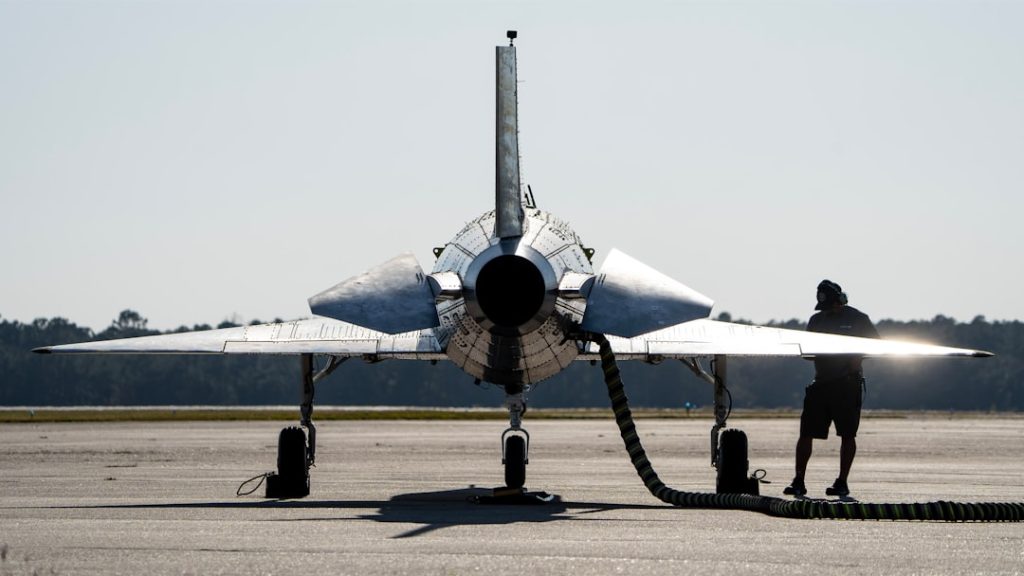
The pursuit of a Doctor of Philosophy (PhD) in Aerospace Engineering represents a significant undertaking, a journey of deep specialization and original inquiry. This advanced degree equips individuals with the capacity to push the boundaries of scientific knowledge and technological innovation within the aerospace sector. It is not merely the acquisition of advanced technical skills but the cultivation of a critical mindset, capable of dissecting complex problems and formulating novel solutions. For those considering this path, understanding its potential is key to navigating the demands and ultimately realizing its rewards.
A PhD in Aerospace Engineering builds upon a robust undergraduate and often a master’s foundation. It moves beyond learning established principles to actively contributing to the body of knowledge.
Deep Specialization and Research Methodologies
The core of a PhD lies in in-depth specialization within a chosen sub-field of aerospace. This could range from aerodynamics, propulsion, and structures to astrodynamics, flight control, or space systems engineering. This specialization is not superficial; it involves a comprehensive understanding of the current state of research, identifying gaps, and formulating a research question that can lead to original contributions. The methodologies employed are rigorous, demanding a mastery of analytical techniques, computational modeling, and experimental design. The researcher learns to select the appropriate tools for the task, whether it be finite element analysis for structural integrity, computational fluid dynamics for airflow prediction, or advanced statistical methods for data analysis. This phase is akin to a cartographer meticulously charting unknown territories, identifying the peaks and valleys previously unmapped.
Theoretical Frameworks and Advanced Mathematics
At the heart of aerospace engineering lies complex mathematics and physics. A PhD dives deeper into these theoretical frameworks, exploring advanced differential equations, tensor calculus, advanced control theory, and sophisticated statistical mechanics. The ability to translate abstract mathematical concepts into tangible engineering solutions is paramount. This involves not just understanding the equations but also interpreting their physical implications and limitations. For instance, understanding the intricacies of turbulence modeling requires a grasp of statistical turbulence theories and their application to complex flow phenomena. This deep theoretical grounding acts as the bedrock upon which novel designs and analyses are constructed.
The Research Cycle: From Hypothesis to Dissemination
The PhD journey is intrinsically tied to the research cycle, a demanding yet rewarding process that transforms raw curiosity into validated knowledge.
Problem Identification and Hypothesis Formulation
The initial stage involves identifying a significant problem or knowledge gap within the chosen specialization. This requires a keen awareness of current industry challenges, emerging technologies, and unresolved scientific questions. The researcher must then formulate a testable hypothesis, a precise statement predicting the outcome of their investigation. This is an iterative process, often involving extensive literature reviews to understand what has already been explored and where new avenues lie. The hypothesis acts as the compass, guiding the entire research endeavor.
Experimental Design and Data Acquisition
Once a hypothesis is established, the next crucial step is designing an experimental or computational approach to test it. This involves meticulous planning of methodologies, selecting appropriate equipment or software, and establishing clear protocols. Data acquisition must be precise and reliable, ensuring that the information gathered accurately reflects the phenomena under investigation. This could involve setting up wind tunnel experiments, conducting flight tests, developing complex simulation models, or analyzing sensor data from spacecraft. The integrity of the entire research ultimately rests on the quality of this data.
Data Analysis and Interpretation
The collected data then undergoes rigorous analysis. This is where the researcher applies their advanced statistical and computational skills to extract meaningful insights. Identifying trends, correlations, and statistically significant results is key. Interpretation goes beyond simply presenting numbers; it involves understanding what those numbers mean in the context of the original hypothesis and the broader field of aerospace engineering. This phase is akin to a detective piecing together clues, looking for the underlying narrative within the collected evidence.
Conclusion Drawing and Validation
Based on the analysis and interpretation of data, conclusions are drawn regarding the validity of the hypothesis. This may lead to the refinement of existing theories, the proposal of new models, or the development of innovative engineering solutions. The validation process is critical, ensuring that the findings are robust and reproducible. Peer review, a cornerstone of academic research, plays a vital role here, subjecting the work to scrutiny by other experts in the field.
Career Trajectories: Beyond Academia
A PhD in Aerospace Engineering opens doors to a diverse range of career opportunities, extending far beyond traditional academic research positions.
Academia and Research Institutions
For those with a passion for teaching and fundamental research, an academic career at a university or a dedicated research institution is a natural progression. This involves conducting cutting-edge research, securing grants, publishing findings in peer-reviewed journals, and mentoring future generations of engineers. Academic roles provide the freedom to explore theoretical frontiers and contribute to long-term scientific advancement.
Industry and Development
The aerospace industry is a major employer of PhD graduates. Companies involved in aircraft design and manufacturing, satellite development, space exploration, and defense systems actively seek individuals with advanced analytical and problem-solving skills. PhDs are often employed in R&D departments, leading innovation, developing new technologies, and tackling complex engineering challenges. They might be found designing more efficient jet engines, developing advanced materials for spacecraft, or creating sophisticated control systems for autonomous flight. The industry landscape is a fertile ground for applying theoretical knowledge to practical, real-world problems.
Government and Policy
Government agencies, such as NASA, the European Space Agency (ESA), and national aviation authorities, represent another significant career path. These organizations rely on individuals with deep technical expertise to guide policy, oversee space missions, regulate air travel, and conduct national security-related research. PhDs can contribute to setting standards, advising on technological roadmaps, and leading ambitious projects that impact societal progress.
Entrepreneurship and Innovation
The entrepreneurial spirit is also fostered by a PhD. Graduates with a deep understanding of emerging technologies and a proven ability to innovate can leverage their expertise to launch startups. This could involve developing novel aerospace technologies, creating specialized consulting services, or commercializing research breakthroughs. The entrepreneurial route requires a blend of technical acumen and business acumen, a combination that a PhD can help cultivate.
The Transformative Impact of a PhD
Earning an Aerospace Engineering PhD is a transformative experience that reshapes an individual’s capabilities and perspectives.
Cultivating Critical Thinking and Problem-Solving
The inherent challenges of doctoral research necessitate the development of exceptional critical thinking skills. Candidates are constantly pushed to question assumptions, evaluate evidence, and approach problems from multiple angles. This rigorous training equips them to tackle ill-defined problems with confidence and creativity. They learn to dissect complex systems, identify root causes, and devise elegant solutions. This ability is not limited to technical challenges but extends to strategic decision-making and leadership.
Fostering Independence and Resilience
A PhD journey demands a high degree of independence. Researchers are largely self-directed, responsible for managing their projects, overcoming obstacles, and pushing through periods of uncertainty. This fosters a strong sense of self-reliance and mental resilience. The inevitable setbacks and failed experiments become opportunities for learning and adaptation, building a robust character capable of navigating the inherent complexities of advanced research and its subsequent application.
Enhancing Communication and Collaboration
While a PhD is primarily an individual pursuit, it also involves significant collaboration and communication. Presenting research findings at conferences, writing scientific papers, and defending one’s thesis require clear and concise articulation of complex ideas. Working with supervisors, lab mates, and other researchers also hones collaborative skills, teaching individuals to work effectively in teams, share knowledge, and build consensus. The ability to communicate technical concepts to both expert and non-expert audiences is a valuable asset gained from this experience.
The Future Landscape: Navigating New Frontiers
| Metric | Details |
|---|---|
| Average Duration | 4 to 6 years |
| Core Subjects | Fluid Dynamics, Aerodynamics, Propulsion, Structural Mechanics, Control Systems |
| Research Areas | Aircraft Design, Spacecraft Systems, Computational Fluid Dynamics, Materials Science, Robotics |
| Typical Admission Requirements | Master’s degree in Aerospace Engineering or related field, GRE scores, Letters of Recommendation |
| Average Stipend | Varies by institution and country |
| Career Opportunities | Research Scientist, Aerospace Engineer, University Professor, Systems Engineer, Consultant |
| Top Universities | MIT, Stanford University, Caltech, University of Michigan, Georgia Tech |
| Publication Expectation | 2-5 peer-reviewed journal papers during the program |
The aerospace field is characterized by constant evolution, and a PhD equips individuals to be at the forefront of these advancements.
Emerging Technologies and Disruptive Innovations
The aerospace industry is in a perpetual state of flux, driven by emerging technologies such as artificial intelligence, advanced materials, and sustainable propulsion systems. A PhD provides the specialized knowledge and research skills necessary to understand, develop, and implement these disruptive innovations. Whether it is designing hypersonic vehicles, developing electric aircraft, or exploring advanced space propulsion, doctoral graduates are poised to shape the future of flight and space exploration. They are the architects of tomorrow’s aerospace landscape.
Global Challenges and Interdisciplinary Solutions
Addressing global challenges like climate change and sustainable development requires interdisciplinary approaches, and aerospace engineering plays a crucial role. PhD graduates can contribute to developing technologies for carbon-neutral aviation, advanced weather monitoring systems, or satellite-based solutions for environmental management. The ability to bridge different scientific and engineering disciplines, a skill honed during doctoral studies, is essential for tackling these complex, multifaceted problems facing humanity.
The Ongoing Pursuit of Knowledge
Ultimately, a PhD in Aerospace Engineering is more than just a degree; it is a commitment to the ongoing pursuit of knowledge. It instills a lifelong learning mindset, preparing individuals to continuously adapt to new scientific discoveries and technological advancements. The skills acquired on the path to a doctorate are not static; they are the tools that enable individuals to remain at the cutting edge of a dynamic and ever-evolving field, contributing to breakthroughs that will define the future of aerospace.