For decades, NASA has been a driving force in pushing the boundaries of what is possible in flight. This institution, perhaps more than any other, has served as the crucible where abstract aerodynamic principles are forged into tangible realities that have shaped our world. The advancements in aeronautical engineering at NASA are not merely incremental steps; they represent leaps forward, akin to a bird learning to harness a new kind of wind, extending its range and capabilities. These developments have had a profound impact, influencing everything from commercial aviation to national security, and continuing to shape the future of flight.
NASA’s pursuit of more efficient and capable propulsion systems has been a cornerstone of its aeronautical endeavors. The quest for speed, range, and reduced environmental impact has driven continuous research and development, leading to breakthroughs that have redefined aircraft performance.
Supersonic and Hypersonic Propulsion
The dream of routinely traveling at supersonic speeds, let alone the realm of hypersonic flight, has been a persistent challenge. NASA has been at the forefront of researching engine technologies capable of sustaining these extreme velocities.
Ramjets and Scramjets
The fundamental principles of ramjet and scramjet engines are rooted in the engine’s forward motion to compress incoming air, eliminating the need for complex rotating machinery found in traditional jet engines. A ramjet operates by slowing incoming supersonic air to subsonic speeds for combustion, while a scramjet (supersonic combustion ramjet) achieves combustion at supersonic speeds. This latter feat is a significant engineering hurdle, as the air must be compressed, fuel injected, and combustion completed in mere milliseconds. NASA’s work on scramjets, exemplified by programs like the X-43, has been crucial in demonstrating the feasibility of sustained hypersonic flight. These engines, essentially tubes that ingest air at extreme speeds, are less about mechanical complexity and more about precise control of airflow and combustion under incredibly demanding conditions. The challenge is akin to trying to light a match in a hurricane – the forces are immense and the time for reaction is minuscule.
Advanced Turbine Engines
Beyond the exotic realm of hypersonic flight, NASA has also dedicated significant effort to improving the efficiency and reducing the environmental footprint of conventional turbine engines. This includes research into advanced materials, innovative combustion techniques, and novel engine architectures.
Laminar Flow Control in Engine Nacelles
Controlling the airflow around engine nacelles can significantly reduce drag. NASA has explored various laminar flow control techniques, aiming to maintain smooth, non-turbulent airflow over the nacelle’s surface. This can be achieved passively through carefully designed shapes, or actively through suction or blowing mechanisms. Imagine trying to push a smooth, polished ball versus a rough, bumpy one through water; the difference in resistance is substantial. Laminar flow offers that smooth passage.
Electric and Hybrid-Electric Propulsion
The drive towards sustainability has pushed NASA to investigate electric and hybrid-electric propulsion systems for aircraft. This research involves developing advanced battery technologies, efficient electric motors, and integrated power management systems. While still in its nascent stages for large commercial aircraft, this technology holds the promise of significantly quieter and cleaner aviation. The vision is to create aircraft that are powered not by the roar of combustion, but by the hum of electricity, akin to transitioning from a steam engine to an electric motor.
Aerodynamic Design and Control
NASA’s expertise in aerodynamics is legendary, and the agency continues to develop sophisticated tools and techniques to optimize aircraft performance and maneuverability. This involves understanding and manipulating the complex interplay of airflow around an aircraft’s surfaces.
Advanced Airfoil Design
The shape of an airplane’s wing, its airfoil, is critical to how it generates lift and minimizes drag. NASA’s research has led to the development of highly efficient airfoils that can perform optimally across a range of flight conditions.
Computational Fluid Dynamics (CFD)
CFD has revolutionized aerodynamic design by allowing engineers to simulate airflow around aircraft computationally. This reduces the need for extensive and costly physical wind tunnel testing, enabling rapid iteration and optimization of designs. CFD acts as a virtual wind tunnel, allowing engineers to “fly” their designs at the speed of computation, revealing how air will flow around them without physically building anything. It’s like having a crystal ball that can predict the weather patterns around an aircraft.
Adaptive Wing Technologies
Adaptive wing technologies aim to change the shape of wings in flight to optimize performance. This can involve morphing wings that can adjust their camber or sweep, or deployable control surfaces. The goal is to allow an aircraft to become more efficient and adaptable, much like a bird can adjust its wing shape to catch different updrafts.
Flight Control Systems
Modern aircraft rely on sophisticated flight control systems to maintain stability and execute maneuvers. NASA has been instrumental in developing advanced control algorithms and integrated systems.
Fly-by-Wire and Beyond
The transition from mechanical flight controls to fly-by-wire systems, where pilot inputs are transmitted electronically, has enabled more precise and responsive control. NASA’s research extends to even more advanced concepts, such as adaptive control laws that can automatically adjust to changing flight conditions or aircraft damage. This mirrors the evolution from a traditional tiller to a modern joystick in a video game – offering greater precision and responsiveness.
Unmanned Aerial Systems (UAS) Control
The rapid growth of unmanned aerial systems presents unique control challenges. NASA is developing advanced algorithms for autonomous navigation, cooperative control of multiple UAS, and safe integration into national airspace. The challenge is to give these machines a sense of awareness and intelligence, enabling them to navigate and operate safely without direct human piloting, much like teaching a drone to herd sheep.
Materials Science and Structural Innovation
The materials used to build aircraft are as critical as their aerodynamic design. NASA’s work in materials science and structural engineering has led to lighter, stronger, and more durable aircraft.
Advanced Composites
The use of composite materials, such as carbon fiber reinforced polymers, has significantly reduced aircraft weight while increasing strength. NASA has been a pioneer in developing manufacturing techniques and understanding the long-term performance of these materials. Composites offer a strength-to-weight ratio that is often superior to traditional metals, like a finely tuned racing bicycle compared to a sturdy old farm cart.
Nanocomposites
The incorporation of nanomaterials into composites has the potential to further enhance their properties, leading to materials with improved strength, stiffness, and thermal resistance. This is like adding microscopic reinforcements to an already strong material, making it even more resilient.
Self-Healing Materials
A more futuristic, yet actively researched, area is the development of self-healing materials. These materials can autonomously repair minor damage, extending the lifespan of aircraft components and improving safety. Imagine a cut on your skin healing itself; these materials aim to do something similar for aircraft structures, patching small fissures before they become critical problems.
Lightweight Alloys and Ceramics
Beyond composites, NASA continues to research and develop advanced lightweight metal alloys and high-temperature ceramics for use in critical aircraft components, particularly in engines and airframes exposed to extreme heat.
Titanium and Aluminum Alloys
Advancements in the processing and alloying of titanium and aluminum have yielded materials with improved strength-to-weight ratios and corrosion resistance, essential for aerospace applications.
Ceramic Matrix Composites (CMCs)
CMCs offer exceptional high-temperature performance, making them ideal for use in engine components operating under extreme heat, such as turbine blades. This allows engines to operate at higher temperatures, leading to increased efficiency.
Aviation Safety and Traffic Management
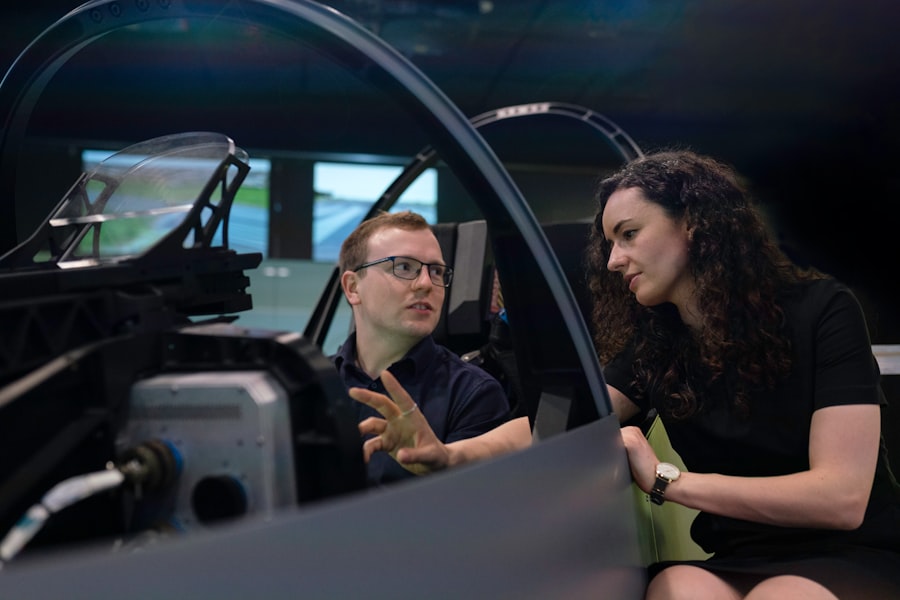
Beyond designing faster and more efficient aircraft, NASA plays a crucial role in ensuring the safety of air travel and optimizing the efficiency of the global air traffic system. This involves a multifaceted approach, from human factors research to advanced computational modeling of the skies.
Air Traffic Management Modernization
The current air traffic management system, while robust, faces increasing demands. NASA is developing Next Generation Air Transportation System (NextGen) technologies to improve capacity, efficiency, and safety.
Trajectory-Based Operations (TBO)
TBO focuses on optimizing flight paths based on dynamic weather, traffic, and performance considerations, moving away from rigid, predefined routes. This allows for more flexible and efficient flight plans, like optimizing a road trip route based on real-time traffic and weather, rather than sticking to a fixed map.
Data Comm and ADS-B
The implementation of Data Comm (digital communication between controllers and pilots) and Automatic Dependent Surveillance-Broadcast (ADS-B) is enhancing situational awareness and enabling more precise tracking of aircraft. Imagine having a clearer view of all the cars on the road, not just the ones you can see directly, but also those broadcasting their location and intentions.
Human Factors and Pilot Training
Human error remains a factor in aviation accidents. NASA’s research into human factors investigates pilot decision-making, workload management, and the design of intuitive cockpits to minimize errors.
Crew Resource Management (CRM)
CRM training emphasizes effective communication, teamwork, and decision-making within the cockpit. NASA has contributed to the development and refinement of CRM principles. This is about ensuring that the pilots, like a well-rehearsed orchestra, are in perfect sync, communicating and coordinating their actions seamlessly.
Advanced Simulators and Virtual Reality
NASA utilizes advanced flight simulators and virtual reality technologies to train pilots in a wide range of scenarios, including emergency procedures, without the risks associated with actual flight. This provides a safe and repeatable environment to hone critical skills.
Future Concepts and Exploration
| Metric | Value | Description |
|---|---|---|
| Number of Aeronautical Engineers at NASA | Approx. 1,200 | Estimated number of aeronautical engineers employed across various NASA centers |
| Annual Aeronautical Research Budget | 1.5 Billion USD | Approximate yearly funding allocated to aeronautical research and development |
| Number of Aeronautical Research Projects | 150+ | Active projects focusing on aircraft design, propulsion, and aerodynamics |
| Key Aeronautical Research Areas | Hypersonics, UAVs, Sustainable Aviation | Primary focus areas for NASA’s aeronautical engineering research |
| Number of Patents Filed (Last 5 Years) | 75 | Patents related to aeronautical technologies and innovations |
| Average Flight Test Hours per Year | 2,000+ | Hours spent on flight testing experimental aircraft and technologies |
NASA’s aeronautical engineering efforts are not just about improving current aviation; they are fundamentally about shaping its future. The agency consistently explores radical new concepts that could redefine flight as we know it.
Advanced Air Mobility (AAM)
The concept of AAM envisions a future where small, electric aircraft provide on-demand transportation within urban and suburban environments. NASA is playing a key role in developing the technologies and operational concepts for this emerging sector. This is about creating a new layer of transportation, like hovercraft or personal aerial taxis, to ease congestion at ground level.
Urban Air Mobility (UAM) Vertiports
The infrastructure for AAM, including dedicated landing and charging facilities (vertiports), is a critical area of research. NASA is collaborating with industry partners to develop standards and operational models for these facilities.
eVTOL Aircraft Design and Certification
NASA is contributing to the design and certification of electric vertical takeoff and landing (eVTOL) aircraft, addressing challenges related to battery technology, noise reduction, and safety.
Supersonic Transport (SST) Revival
While Concorde is no longer in service, NASA is actively researching technologies that could enable the return of reliable and environmentally sustainable supersonic commercial flight. This includes efforts to mitigate the sonic boom, a significant barrier to overland supersonic flight. The goal is to make traveling across continents as fast as a blink, without the disruptive sonic thump.
Sonic Boom Mitigation
Reducing the audible sonic boom produced by supersonic aircraft is crucial for acceptance. NASA’s research involves shaping aircraft and designing flight paths to minimize this acoustic disturbance.
Sustainable Aviation Fuels (SAFs)
Beyond electric propulsion, NASA is also investigating advanced biofuels and synthetic fuels as alternatives to traditional jet fuel, aiming to significantly reduce the carbon footprint of aviation. This is about finding “greener” sources of energy for the existing infrastructure, making the transition to sustainability smoother.
The advancements in aeronautical engineering at NASA represent a continuous commitment to innovation. From the foundational physics of flight to the complex systems that manage our skies, NASA’s work acts as a powerful engine, propelling humanity toward new frontiers in aviation and offering a glimpse into the skies of tomorrow.