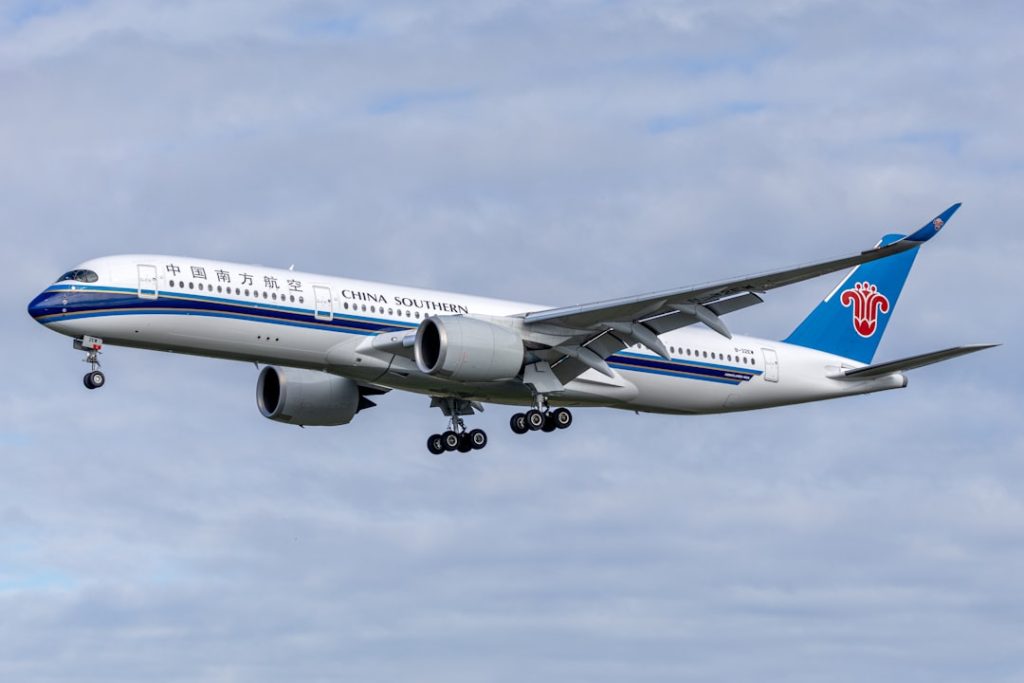
China’s advancements in aerospace technology have been significant and rapid. Over the past few decades, the country has transitioned from a comparatively nascent player to a major force in space exploration and aviation. This transformation is the result of sustained investment, strategic planning, and a focused commitment to developing indigenous capabilities.
China’s space program, overseen by the China National Space Administration (CNSA), has achieved a series of ambitious milestones. The nation’s focus has been on developing a comprehensive suite of space capabilities, encompassing human spaceflight, lunar exploration, planetary missions, and a robust satellite infrastructure.
Human Spaceflight Program
The Shenzhou program represents China’s flagship human spaceflight endeavor. Launched in 1999, the program aims to achieve independent human spaceflight capability.
Uncrewed Missions and Milestones
The initial phases of the Shenzhou program involved uncrewed test flights to validate the spacecraft’s design and performance. Shenzhou 1, launched in 1999, was an uncrewed test flight. Subsequent uncrewed missions, such as Shenzhou 2, 3, and 4, progressively incorporated systems for life support, in-flight testing, and astronaut egress. These missions were critical for gathering data and refining the technology necessary for human spaceflight.
First Taikonaut and Beyond
In 2003, Yang Liwei aboard Shenzhou 5 became the first Chinese taikonaut to travel into orbit, marking a historic achievement for the nation. This demonstrated China’s ability to independently launch humans into space. The program continued to build on this success with more complex missions.
Spacewalks and Extravehicular Activities
Succeeding missions, like Shenzhou 7 in 2008, featured the first spacewalk by a Chinese taikonaut (Zhai Zhigang). This was a significant step, showcasing advanced astronaut training and the capability to perform extravehicular activities (EVAs), essential for future space station operations and repairs.
Extended Stays and Crewed Docking
Later Shenzhou missions facilitated longer duration stays in orbit and demonstrated docking capabilities with orbital modules. Shenzhou 8, in 2011, conducted an uncrewed rendezvous and docking with the Tiangong-1 experimental space laboratory. This was followed by crewed docking missions with Tiangong-1 and later Tiangong-2, illustrating China’s growing proficiency in orbital rendezvous and docking maneuvers.
Lunar Exploration Program (Chang’e Missions)
China’s Chang’e program is dedicated to lunar exploration, with ambitious goals including orbiting, landing, and returning lunar samples to Earth. This program is a cornerstone of China’s deep space ambitions, akin to planting a flag on a new frontier.
Orbiter Missions
The initial phase of the Chang’e program involved orbiting satellites. Chang’e 1, launched in 2007, was China’s first lunar orbiter, equipped with instruments to map the lunar surface and study its composition. Chang’e 2, launched in 2010, built upon this with improved imaging capabilities and a longer mission duration, venturing beyond lunar orbit into deep space.
Lunar Landers and Rovers
The program progressed to the challenging task of soft-landing on the Moon. Chang’e 3, launched in 2013, successfully landed a rover, Yutu, on the lunar surface. This marked China’s first lunar soft landing and the deployment of a lunar rover, enabling in-situ scientific investigations.
Sample Return Missions
A key objective of the Chang’e program is to bring lunar samples back to Earth. Chang’e 5, launched in 2020, achieved this ambitious goal. It successfully landed on the Moon, collected surface samples, and returned them to Earth for scientific analysis. This capability is crucial for understanding the Moon’s geological history and potential resources.
Future Lunar Ambitions
The Chang’e program continues with plans for even more sophisticated missions, including potential crewed lunar landings and the establishment of a lunar research station. These future endeavors signal China’s long-term vision for lunar presence and exploration.
Planetary Exploration Missions
Beyond the Moon, China has embarked on missions to explore other celestial bodies, demonstrating its expanding reach in the solar system.
Mars Exploration
The Tianwen-1 mission, launched in 2020, is a significant step in China’s Mars exploration efforts. It comprised an orbiter, a lander, and a rover named Zhurong. This mission successfully entered Mars orbit, deployed the lander and rover onto the Martian surface, and conducted scientific studies. Tianwen-1’s success made China the second nation to successfully land a rover on Mars.
Future Interplanetary Missions
China has expressed ambitions for future missions to other planets and asteroids, indicating a growing capacity for complex interplanetary exploration. These plans suggest a systematic approach to understanding our solar neighborhood.
Satellite Applications and Constellations
China has developed a comprehensive satellite infrastructure for various applications, including communication, navigation, Earth observation, and scientific research.
BeiDou Navigation Satellite System
The BeiDou Navigation Satellite System is China’s independent global satellite navigation system, designed to rival and complement systems like GPS.
Development and Global Coverage
BeiDou has evolved through several generations, with the initial phase focusing on regional coverage and subsequent phases achieving global positioning capabilities. The system provides precise positioning, navigation, and timing services worldwide, supporting applications in transportation, disaster relief, and everyday use.
Technological Advancements
The development of BeiDou showcases China’s advancements in satellite design, launch technology, and the complex management of a global navigation constellation. Its deployment signifies strategic independence in a critical technological domain.
Earth Observation Satellites
China operates an extensive network of Earth observation satellites for monitoring natural resources, environmental changes, meteorological forecasting, and disaster management.
High-Resolution Imaging and Data Acquisition
These satellites provide high-resolution imagery and data, enabling detailed analysis of Earth’s surface, atmosphere, and oceans. This information is vital for scientific research, urban planning, agricultural management, and national security.
Remote Sensing Technology
The continuous development and deployment of advanced remote sensing technologies are central to China’s Earth observation capabilities, allowing for the acquisition of diverse data types.
Communication Satellites
China has a robust satellite communication network, including geostationary and low Earth orbit satellites, providing broadcasting, telecommunications, and internet services. The development of high-throughput satellites is a key focus.
Aerospace Manufacturing and Aviation Industry
China’s advancements extend to the manufacturing of aircraft and related aerospace components, aiming for greater self-sufficiency and a prominent role in the global aviation market.
Commercial Aircraft Development
A significant aspect of China’s aerospace ambitions is the development of indigenously designed and manufactured commercial passenger aircraft, challenging the dominance of established manufacturers like Boeing and Airbus. This is a long-term play to capture a substantial share of the global air travel market.
COMAC C919 Program
The Commercial Aircraft Corporation of China (COMAC) C919 is a narrow-body twin-engine jet airliner developed by COMAC.
Design and Development Challenges
The C919 program has faced rigorous design and testing phases, aimed at meeting international safety and performance standards. The development process involves a complex supply chain and extensive collaboration with international partners for certain components.
Certification and Market Entry
Achieving certification from aviation authorities is a crucial step for the C919 to enter commercial service. China has prioritized obtaining the necessary approvals to allow the aircraft to fly passengers. Its market entry will be a significant indicator of its competitiveness.
COMAC C929 Program
The COMAC C929 is a wide-body twin-engine jet airliner, a joint venture with Russia’s United Aircraft Corporation.
Strategic Partnership and Future Ambitions
This program represents a strategic partnership aimed at developing a long-range aircraft to compete in the wide-body market. The C929 is intended to offer an alternative to existing aircraft in this segment, reflecting China’s broader ambitions in civil aviation.
Military Aircraft Modernization
China has made substantial progress in modernizing its military aviation fleet, developing advanced fighter jets, bombers, and transport aircraft. This is a critical component of its national defense strategy.
Stealth Fighter Development
The Chengdu J-20 is a fifth-generation stealth fighter jet that has entered service with the People’s Liberation Army Air Force (PLAAF).
Technological Capabilities
The J-20’s design incorporates stealth features, advanced avionics, and significant maneuverability, placing it among the most advanced fighter aircraft globally. Its development signifies a leap in China’s indigenous aerospace design and manufacturing capabilities.
Operational Integration
The integration of the J-20 into PLAAF operations demonstrates China’s commitment to fielding a modern, capable air force.
Other Military Aircraft
Beyond the J-20, China has developed and deployed a range of other advanced military aircraft, including the J-10 fighter, H-6 bomber variants, and the Y-20 strategic transport aircraft. These platforms enhance China’s military power projection.
Engine Technology and Manufacturing
A crucial element of aerospace development is independent engine technology. China has been investing heavily in developing its own aero-engines to reduce reliance on foreign suppliers and ensure technological self-sufficiency.
WS-10 and Future Engines
The WS-10 is a turbofan engine developed in China, intended for use in various military aircraft. Ongoing research and development aim to produce even more powerful and efficient engines.
Indigenous Development Focus
The focus on indigenous engine development is strategic, as engines are complex and critical components that significantly impact aircraft performance and cost. Success in this area is a differentiator for any major aerospace power.
Aerospace Materials and Manufacturing Processes
Advancements in materials science and manufacturing processes are fundamental to producing lighter, stronger, and more efficient aerospace components.
Composite Materials and Advanced Alloys
China is actively developing and utilizing advanced materials, including composite materials and high-strength alloys, in aircraft and spacecraft construction.
Precision Manufacturing Techniques
The adoption of advanced manufacturing techniques, such as additive manufacturing (3D printing) and precision machining, is enhancing the capability to produce complex aerospace parts with greater accuracy and efficiency.
Rocketry and Launch Capabilities
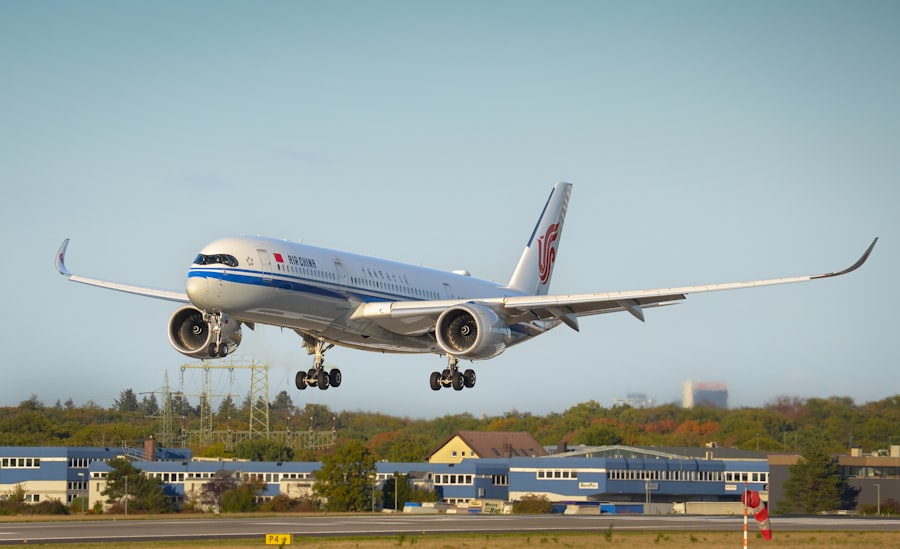
China’s advancements in rocketry and launch infrastructure are the backbone of its space program, enabling the deployment of satellites, crewed missions, and deep space probes.
Long March Rocket Family
The Long March (Chang Zheng) rocket family is China’s primary launch vehicle series. These rockets have evolved significantly in capability and reliability.
Evolution of Launch Vehicles
The Long March series encompasses a range of vehicles, from smaller rockets for LEO missions to heavy-lift rockets capable of launching payloads to geostationary orbit and beyond.
Reliability and Success Rates
China has placed a strong emphasis on improving the reliability and success rates of its Long March rockets, essential for maintaining confidence in its space launch capabilities.
Development of New Generation Launchers
China is developing new generation intelligent launch vehicles, including super-heavy lift rockets, which will be critical for future ambitious space missions.
Launch Sites and Infrastructure
China operates several launch sites strategically located to support its diverse launch requirements.
Jiuquan, Taiyuan, Xichang, and Wenchang
These sites, including the coastal Wenchang Space Launch Center, are equipped with modern facilities for preparing and launching various rocket types. The development of Wenchang, in particular, reflects an effort to modernize launch infrastructure and support larger payloads.
Reusable Rocket Technology
Like other space-faring nations, China is investing in the development of reusable rocket technology to reduce launch costs and increase launch frequency. Research is ongoing into various approaches for rocket recovery and reuse.
Space Station Development

China has achieved a significant milestone in space exploration with the establishment of its own modular space station.
Tiangong Space Station Program
The Tiangong space station program is a multi-module orbital outpost designed for long-term human habitation and scientific research. This is China’s assertive declaration of its presence in low Earth orbit, a domain historically dominated by a few.
Tiangong-1 and Tiangong-2 Precursors
Earlier experimental space laboratories, Tiangong-1 and Tiangong-2, served as crucial testbeds for rendezvous, docking, and life support technologies necessary for the construction of a larger station.
Modular Construction and Core Module Launch
The current Tiangong space station is being assembled in orbit through the launch and docking of several modules. The launch of the Tianhe core module in 2021 marked the beginning of its in-orbit construction.
Supporting Modules and Expansion
Subsequent launches have delivered laboratory modules (Wentian and Mengtian), expanding the station’s research capabilities and living space. The modular design allows for flexibility and future expansion.
International Collaboration and Scientific Experiments
Tiangong is intended to host a range of scientific experiments across various disciplines, from physics and biology to Earth observation. China has also expressed openness to international collaboration on the station, although its operational independence is a key feature.
Crewed Missions to Tiangong
Taikanouts are regularly rotated to the Tiangong space station aboard Shenzhou spacecraft, undertaking scientific research, maintenance, and expansion activities. These missions demonstrate sustained human presence in orbit.
Challenges and Future Outlook
| Metric | Value | Year | Notes |
|---|---|---|---|
| Number of Space Launches | 55 | 2023 | China conducted 55 orbital launches in 2023 |
| Successful Launch Rate | 96% | 2023 | High reliability in launch missions |
| Number of Satellites Launched | 120 | 2023 | Includes communication, navigation, and earth observation satellites |
| Major Spacecraft | Tiangong Space Station | Operational since 2021 | China’s modular space station in low Earth orbit |
| Lunar Missions | Chang’e 5 Sample Return | 2020 | Returned lunar soil samples to Earth |
| Manned Spaceflights | 15 | As of 2023 | Including Shenzhou missions to Tiangong |
| Space Budget | ~11 billion | 2023 | Estimated annual expenditure in USD equivalent |
Despite its impressive progress, China’s aerospace sector faces ongoing challenges and has a dynamic future ahead.
Technological Hurdles and Innovation
While progress has been rapid, continued innovation is required in areas such as advanced propulsion, deep space communication, and next-generation materials. Staying at the forefront requires constant scientific and engineering advancement.
International Cooperation and Competition
The landscape of space exploration is one of both collaboration and competition. China’s advancements are viewed through the lens of geopolitical dynamics, influencing international partnerships and the direction of global space policy.
Commercialization of Space
Similar to trends in other countries, China is actively exploring the commercialization of its space sector, encouraging private companies to participate in launch services, satellite manufacturing, and space-based applications. This shift could accelerate innovation and expand access to space.
Long-Term Vision for Space Exploration
China’s aerospace trajectory points towards ambitious long-term goals, including lunar base construction, Mars sample return missions, and potentially human missions to other parts of the solar system. The nation appears committed to establishing a lasting presence beyond Earth. The aerospace sector in China is not merely building rockets; it is building a future.