The F-35 Lightning II, developed by Lockheed Martin, represents a significant leap in military aviation technology and capabilities. Designed as a multirole stealth fighter, the F-35 is intended to perform a variety of missions, including air-to-air combat, air-to-ground strikes, and intelligence, surveillance, and reconnaissance (ISR) operations. Its development began in the late 1990s as part of the Joint Strike Fighter (JSF) program, which aimed to create a family of aircraft that could serve multiple branches of the U.S.
military and allied nations. The F-35 program has since evolved into one of the most ambitious and complex defense projects in history, with a focus on integrating advanced technologies to enhance combat effectiveness. The F-35 is not merely an evolution of previous fighter designs; it embodies a paradigm shift in how air combat is conducted.
With its advanced avionics, sensor fusion capabilities, and network-centric warfare features, the F-35 is designed to operate in highly contested environments where traditional aircraft might struggle. Its ability to gather and process vast amounts of data in real-time allows pilots to make informed decisions quickly, enhancing situational awareness and operational effectiveness. As military strategies evolve to address new threats and challenges, the F-35 stands at the forefront of this transformation, promising to redefine air superiority for decades to come.
Key Takeaways
- The F35 is a game-changing aircraft with advanced technology and capabilities that make it a versatile and multirole fighter.
- Its enhanced stealth and survivability features make it a formidable force in modern warfare, while collaborative development and international partnerships have made it a global asset.
- Training and support for F35 pilots and crew are crucial for maximizing the aircraft’s potential, and ongoing integration and future upgrades ensure its relevance in evolving combat scenarios.
- The F35 has had a significant impact on modern warfare and global security, setting new standards for air superiority and defense capabilities.
Advanced Technology and Capabilities of the F35

At the heart of the F-35’s capabilities lies its advanced technology, which includes cutting-edge avionics, sensors, and weapons systems. The aircraft is equipped with the AN/APG-81 AESA (Active Electronically Scanned Array) radar, which provides exceptional target detection and tracking capabilities. This radar system allows the F-35 to detect enemy aircraft and ground targets at long ranges while simultaneously tracking multiple targets.
The radar’s electronic scanning capability enables it to operate in environments where traditional radar systems might be jammed or otherwise compromised. Moreover, the F-35 features an advanced electronic warfare suite that enhances its survivability in hostile environments. This suite includes sophisticated jamming capabilities and electronic countermeasures that can disrupt enemy radar and missile systems.
The integration of these technologies allows the F-35 to operate effectively in contested airspace, providing a significant advantage over adversaries who may rely on older systems. Additionally, the aircraft’s sensor fusion technology combines data from various onboard sensors into a single, coherent picture for the pilot, enabling them to make rapid decisions based on comprehensive situational awareness.
The Versatility and Multirole Capabilities of the F35
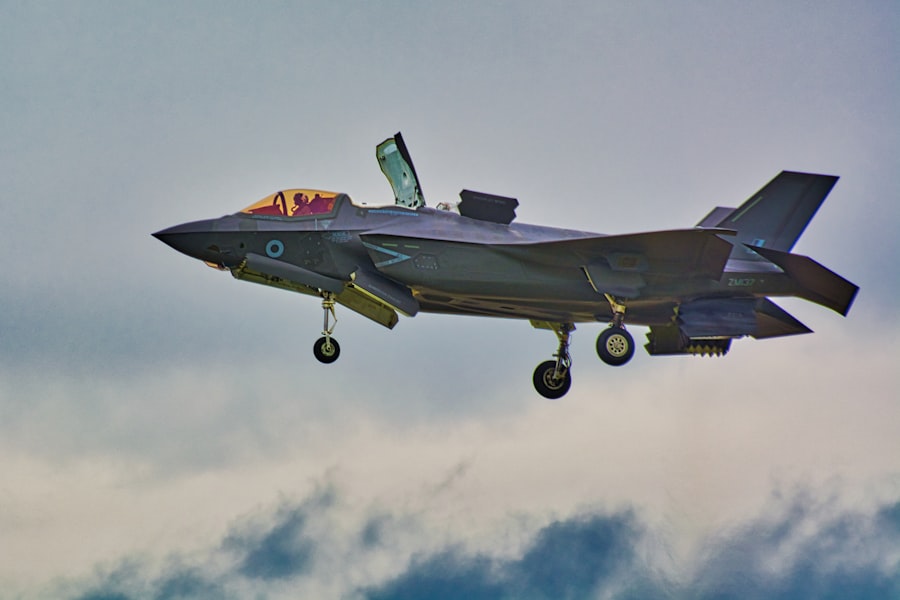
One of the defining characteristics of the F-35 is its versatility as a multirole aircraft. Unlike traditional fighters that are often optimized for specific missions, the F-35 is designed to perform a wide range of tasks across different combat scenarios. This multirole capability is particularly valuable for modern militaries that require flexibility in their air operations.
The F-35 can seamlessly transition from air-to-air combat to ground attack missions without requiring extensive modifications or reconfiguration. The aircraft’s design includes three distinct variants: the F-35A for conventional takeoff and landing (CTOL), the F-35B for short takeoff and vertical landing (STOVL), and the F-35C for carrier operations. This diversity allows the F-35 to be deployed across various platforms, including land bases and aircraft carriers, making it suitable for different branches of the military.
For instance, the F-35B’s ability to operate from amphibious assault ships enhances naval aviation capabilities, while the F-35C’s larger wingspan and reinforced landing gear make it ideal for carrier operations. This adaptability ensures that the F-35 can meet diverse mission requirements across different theaters of operation.
Enhanced Stealth and Survivability Features
| Enhanced Stealth and Survivability Features | Metrics |
|---|---|
| Low Observable Technology | Reduced radar cross-section |
| Advanced Coating Materials | Improved infrared signature management |
| Internal Weapons Storage | Reduced vulnerability to enemy detection |
| Electronic Warfare Systems | Enhanced protection against enemy radar and missile threats |
Stealth technology is one of the most critical aspects of the F-35’s design, allowing it to evade detection by enemy radar systems. The aircraft’s shape, materials, and coatings are engineered to minimize its radar cross-section, making it difficult for adversaries to track or engage effectively. This stealth capability is complemented by advanced electronic warfare systems that can jam enemy radar and disrupt missile guidance systems, further enhancing survivability in hostile environments.
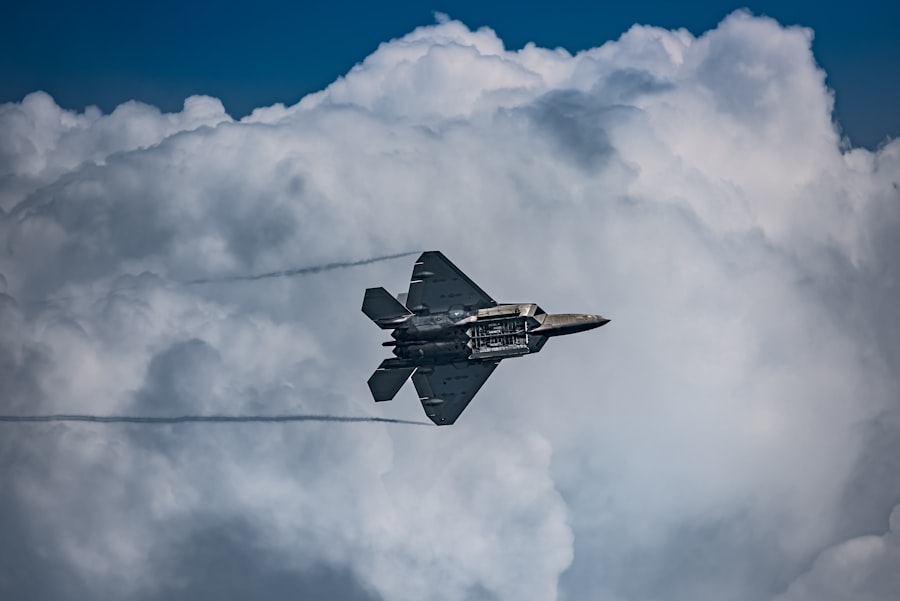
In addition to its stealth features, the F-35 incorporates several design elements that contribute to its overall survivability. The aircraft’s internal weapons bays allow it to carry munitions without compromising its stealth profile. By keeping weapons hidden from radar detection, the F-35 can approach targets undetected before delivering precision strikes.
Furthermore, the use of advanced materials in its construction enhances durability while reducing weight, contributing to improved performance and maneuverability. These combined features ensure that the F-35 can operate effectively in high-threat environments while minimizing risks to pilots and crew.
Collaborative Development and International Partnerships
The development of the F-35 has been characterized by extensive collaboration among multiple nations, making it one of the most significant international defense programs in history. The Joint Strike Fighter program involves participation from several partner countries, including the United Kingdom, Italy, Australia, Canada, Norway, and others. This collaborative approach not only shares development costs but also fosters interoperability among allied forces.
International partnerships have also led to shared technological advancements and innovations that benefit all participating nations. For example, many countries have contributed unique capabilities or requirements that have influenced the design and functionality of the F-35. This collaborative development model ensures that the aircraft meets diverse operational needs while promoting a unified approach to modern warfare among allied nations.
As a result, the F-35 serves as a symbol of international cooperation in defense technology, strengthening alliances and enhancing collective security.
Training and Support for F35 Pilots and Crew
Effective training is essential for maximizing the capabilities of any advanced military aircraft, and the F-35 program places a strong emphasis on pilot and crew training. The integration of sophisticated technologies requires comprehensive training programs that prepare personnel to operate effectively in complex combat scenarios. The F-35 training system includes a combination of classroom instruction, simulator training, and live flight exercises designed to develop proficiency in all aspects of aircraft operation.
The use of advanced simulators allows pilots to experience realistic combat scenarios without the risks associated with live flight training. These simulators replicate various mission profiles and environmental conditions, enabling pilots to practice decision-making skills under pressure. Additionally, maintenance crews receive specialized training to ensure they can support the aircraft’s advanced systems effectively.
This focus on training not only enhances individual proficiency but also contributes to overall mission success by ensuring that all personnel are well-prepared for their roles.
Integration and Future Upgrades for the F35
The F-35 program is designed with future upgrades in mind, ensuring that it remains relevant in an ever-evolving threat landscape. Lockheed Martin has established a framework for continuous improvement through regular software updates and hardware enhancements. This approach allows for rapid integration of new technologies as they become available, ensuring that the F-35 can adapt to emerging challenges.
One notable aspect of this upgrade strategy is the incorporation of artificial intelligence (AI) and machine learning capabilities into the aircraft’s systems. These technologies have the potential to enhance decision-making processes by analyzing vast amounts of data more efficiently than human operators alone. Future upgrades may also include improved sensors, weapons systems, and communication technologies that further enhance operational effectiveness.
By maintaining a commitment to ongoing development and integration, the F-35 program aims to ensure that this game-changing aircraft remains at the forefront of military aviation for years to come.
The Impact of the F35 on Modern Warfare and Global Security
The introduction of the F-35 has profound implications for modern warfare and global security dynamics. As militaries around the world adopt this advanced platform, it reshapes power balances and influences strategic planning among nations. The F-35’s capabilities enable forces to project power more effectively while maintaining a significant advantage over potential adversaries.
Moreover, the interoperability fostered by international partnerships in developing and operating the F-35 enhances collective security among allied nations. As countries integrate this advanced platform into their air forces, they can conduct joint operations more seamlessly, improving coordination during multinational missions. This collaborative approach not only strengthens alliances but also deters aggression from adversaries who may perceive a unified front among allied forces equipped with cutting-edge technology.
In conclusion, the F-35 Lightning II stands as a testament to innovation in military aviation technology. Its advanced capabilities, versatility as a multirole platform, enhanced stealth features, collaborative development efforts, comprehensive training programs, commitment to future upgrades, and impact on global security collectively position it as a game-changing aircraft in modern warfare. As nations continue to navigate complex security challenges in an increasingly interconnected world, the role of advanced platforms like the F-35 will undoubtedly shape future military strategies and operations.